

Mahatma Gandhi and the Politics of Fear and Fearlessness


Today, October 2, is Mahatma Gandhi's birth anniversary.
This Gandhi Jayanti, let us reflect on how the Mahatma’s philosophy of fearlessness dismantles the politics of terror. As anxiety and violence cloud the modern world, his call for mental liberation remains our most powerful defence against tyranny
On a freezing December morning in 1989, amidst the desperate frost of the Romanian winter, a totalitarian illusion shattered on live television. In Bucharest's grand Palace Square, Nicolae Ceaușescu had gathered one hundred thousand citizens for what was meant to be a flawless display of absolute, unyielding authority. For decades, the regime had sustained itself on the suffocating architecture of terror, secret police surveillance, and enforced public adoration.
But as the dictator droned on, a sudden murmur – ignited by the memory of massacred protesters in Timișoara – rippled through the blocks of supposedly loyal workers. Someone shouted. A wave of unscripted jeering broke the decades-long silence. The psychological spell instantly inverted: the crowd stopped trembling, and the dictator froze in helpless, bewildered panic on live television. Within hours, the regime melted away, proving that tyranny is built on a foundation of sand. Yet, long before crowns fell in the Christmas Revolution, Mahatma Gandhi had already mapped how true human liberation begins when the sun of fearlessness slowly rises within the mind.
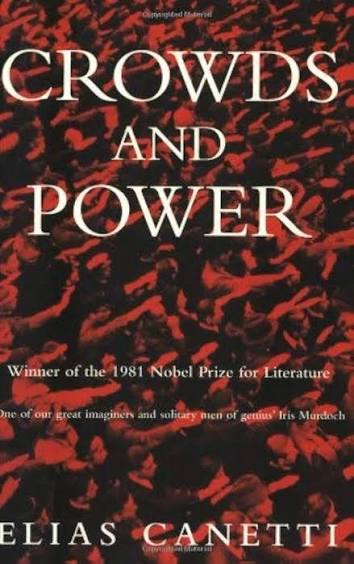
'Crowds and Power' by Nobel laureate Elias Canetti.
Across the architecture of human history, political dominance is rarely sustained by administrative efficiency or institutional grace; it is anchored in the primal mechanics of fear. In his 1960 masterwork, Crowds and Power, Nobel laureate Elias Canetti argued that absolute rulers survive by cultivating terror, engineering obedience, and treating subjects as psychological hostages. Whether examining the suffocating paranoia of human autocrats or the biological cruelties of the natural world, tyranny functions by embedding psychological splinters deep into the soul. Yet, history and moral philosophy reveal that this immense edifice of terror is ultimately a brittle illusion. The true antidote to the politics of fear is not merely the overthrow of a tyrant, but the radical cultivation of internal liberation.
The anatomy of fear
Dictatorships operate on the premise that human beings can be completely colonised through intimidation, turning compliance into an art form. In Joseph Stalin’s Kremlin, this paranoia reached a clinical, suffocating zenith. Stalin did not merely rule through policy; he governed by weaponising the most intimate human bonds. When his suspicions turned toward Polina Zhemchuzhina, the fiercely loyal wife of his indispensable deputy Vyacheslav Molotov, Stalin executed a masterclass in psychological destruction. By forcing Molotov to vote for his own wife's expulsion, divorce her under duress, and endure years of agonizing internal exile while still attending late-night dinners at the dacha, Stalin planted what Canetti termed the "sting"—a permanent psychological splinter forcing the subordinate to actively participate in his own subjugation. Most chillingly, even after Stalin's death, Polina remained a fanatical Stalinist, proving that absolute power can colonise the mind until the victim worships the whip.
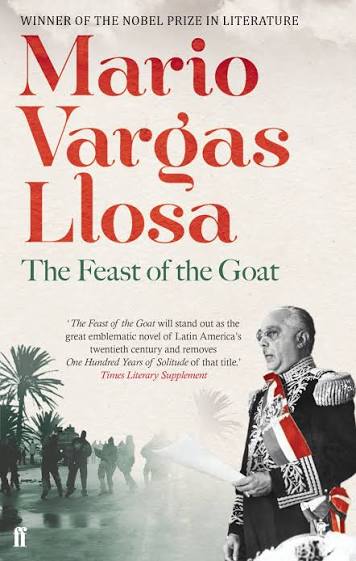
Mario Vargas Llosa’s masterpiece, 'The Feast of the Goat'.
In the Caribbean, Rafael Trujillo weaponised public humiliation and predatory terror on a national scale, a dark reality immortalised in Mario Vargas Llosa’s masterpiece, The Feast of the Goat. Portrayed as an aging, paranoid sovereign, "The Goat" ruled the Dominican Republic through absolute degradation, treating his ministers and citizens as pawns in a grand theatre of dominance. The chilling climax of Vargas Llosa’s novel – where a high-ranking cabinet minister offers his 14-year-old daughter to Trujillo in a desperate, degrading bid to regain political favour – demonstrates how thoroughly a tyrant can break the human spirit, forcing subordinates to sacrifice their own flesh and blood to appease the state.
Suu Kyi on Bhaya-Gati
This dynamic of moral collapse under pressure explains what Burmese leader Aung San Suu Kyi famously analysed in her 1990 address, Freedom from Fear. Reframing traditional ideas of political corruption, she diagnosed how terror eats away at the soul of a nation:
"It is not power that corrupts but fear. Fear of losing power corrupts those who wield it and fear of the scourge of power corrupts those who are subject to it. Most Burmese are familiar with the four a-gati, the four kinds of corruption. Chanda-gati, corruption induced by desire, is deviation from the right path in pursuit of bribes or for the sake of those one loves. Dosa-gati is taking the wrong path to spite those against whom one bears ill will, and moga-gati is aberration due to ignorance. But perhaps the worst of the four is bhaya-gati, for not only does bhaya, fear, stifle and slowly destroy all sense of right and wrong, it so often lies at the root of the other three kinds of corruption."
Suu Kyi identified bhaya-gati – fear-induced corruption – as the most insidious of political aberrations, because fear slowly destroys the moral compass, forcing victims to compromise their humanity just to survive. Dictatorships thrive precisely because they exploit this internal paralysis.
Abhaya, the liberation of the mind
To break the cycle of bhaya-gati, humanity requires a fundamental shift from external compliance to internal sovereignty. Reflecting on the core of the Mahatma’s teachings, Jawaharlal Nehru observed that "the essence of his teaching was fearlessness and truth." Nehru expanded on this profound concept by identifying abhaya as the supreme virtue for individuals and nations, describing it as: "The greatest gift for an individual or a nation was abhaya, fearlessness, not merely bodily courage but absence of fear from the mind."
This distinction is vital. Bodily courage allows a soldier to face a battlefield, but mental fearlessness (abhaya) strips the tyrant of his primary weapon. Stalin, Trujillo, and Ceaușescu relied entirely on planting psychological "stings" to ensure permanent obedience. When a populace achieves abhaya, those invisible threads of terror snap, rendering the entire apparatus of state-sponsored intimidation completely impotent.
Gandhi and the force of love
Mahatma Gandhi did not merely advocate for passive endurance; he engineered an entirely new physics of political power. By introducing satyagraha (truth-force), he transformed the moral landscape of resistance. As Martin Luther King Jr. eloquently observed: "Gandhi was probably the first person in history to lift the love ethic of Jesus above mere interaction between individuals to a powerful and effective social force on a large scale. Love for Gandhi was a potent instrument for social and collective transformation."
Where dictators act as compulsive "survivors" feeding on the subjugation of others, Gandhi weaponized a disciplined, collective love that refused to dehumanise the oppressor while fiercely dismantling the structure of oppression. This love-ethic, paired with unyielding fearlessness, transformed suffering from a badge of defeat into a moral crucible capable of cracking empires.
The ultimate truth of this philosophy is witnessed whenever oppressed societies finally awaken. On that historic December morning in Bucharest, the psychological spell shattered because a populace chose to look past the bayonets and see the emptiness of the threat. The sun of fearlessness slowly arose, casting its light upon a regime that had only ever existed in the shadows of dread.
As we commemorate Gandhi Jayanti, we are reminded that tyranny is a paper tiger. Freedom begins not with the fall of a tyrant's throne, but with the quiet, radical awakening of an unafraid human mind.
As gathering clouds of anxiety, polarisation, and institutional intimidation darken the horizon across India and the world today, the timeless resonance of Gandhian philosophy shines brighter than ever. Totalitarian impulses and modern politics of fear still seek to colonise our minds, demanding silent compliance and planting new, digital and bureaucratic "stings" of self-censorship. Yet, the enduring legacy of the Mahatma reminds us that no apparatus of state control or intimidation can ultimately defeat a population anchored in abhaya. As we navigate an increasingly uncertain global landscape, the path to true democracy does not lie in cowering before the whip, but in answering the quiet, radical call to stand upright, shed our anxieties, and cultivate the unbreakable fearlessness of the human soul.
Faisal C.K. is Deputy Law Secretary to the Government of Keralam. Views are personal.
This article went live on October second, two thousand twenty six, at twenty minutes past ten in the morning.The Wire is now on WhatsApp. Follow our channel for sharp analysis and opinions on the latest developments.


