
Photo Essay: Bauxite Mining a Curse for Adivasis in Odisha's Baphlimali
Abhijit Mohanty


Real journalism holds power accountable
Since 2015, The Wire has done just that.
But we can continue only with your support.
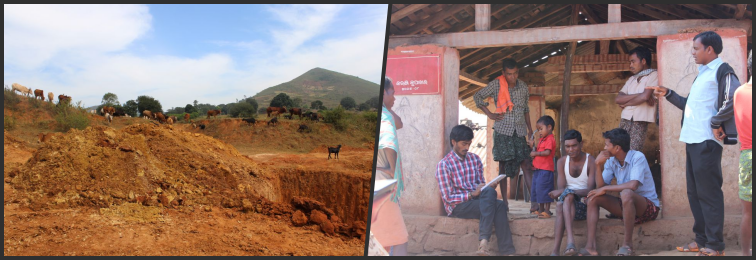
Mining in Baphlimali has caused destruction to the climate and environment, and has wrecked the lifestyle of thousands of adivasis.
“These days we are seeing an increasing number of accidents in the area. The uncovered trucks create problem of spreading dust in air”, said Sahadev Jani, a native of the village. Srinibash Das, a developed professional working in the region, said, “The permissible capacity for each truck to carry the ore is ten tonne/truck with ore wrapped by proper cover. But it has been observed that most of the times the trucks are much overloaded and run without covering the ore.” Credit: Abhijit Mohanty
Over the last 20 years, large tracts of forest have been cleared in the mineral rich districts of Odisha to make space for mining industries. This has severely affected the food and nutritional security of the indigenous communities. For centuries, forests have been a vital source of livelihood for the communities. Non-timber forest produces like tuber, roots, wild mushroom, fruits and berries, which were an integral part of the diet of the adivasi communities and provided essential protein and vitamins, are disappearing at an alarming rate.
Activists fighting for the rights of the adivasi communities claim that the environment and social fabric of adivasi-inhabited areas are severely threatened by large-scale mining and industrial activities. Besides causing drastic climate change and a decline in wildlife, mining in Odisha has displaced and severely undermined the low-carbon-footprint lifestyle of hundreds of thousands of adivasis and other marginalised communities.
The UAIL case
Take, for instance, the case of bauxite mining by Utkal Aluminium International Limited (UAIL) in Baphlimali. The Baphlimali hill range is situated in the south-western part of Odisha. The major part of the hill falls under Kashipur block of Rayagada and the rest is in the Kalahandi district.
For centuries, adivasi communities like the Paraja, Jhodia, Penga and Kondh have been living amidst the Baphlimali foothills. For generations they have depended on Baphlimali for jal, jamin aur jungle (water, land and forest). Rain-fed agriculture of millets, cereals, pulses, paddy and collection of non-timber forest produces were essential for the livelihood of the communities. And most importantly, Baphlimali is also one of their sacred places.
Baphlai Budhi is the reigning goddess of the adivasi communities and is supposed to remain on top of the Baphlimali plateau. Over the years, UAIL has constructed wide roads against the length and breadth of Baphlimali, and check posts have been set up at several places at the hill top. The adivasis are now forbidden from accessing the top of the Baphlimali and are helpless when it comes to protecting their own goddess.
This article went live on August twenty-third, two thousand seventeen, at zero minutes past eight in the morning.The Wire is now on WhatsApp. Follow our channel for sharp analysis and opinions on the latest developments.