

The Wire Wrap | What Does the Police Action on Anti-SIR Protests Imply?


On Gandhi Jayanti, opposition parties and thousands of protesters took to the streets of the national capital to demand Chief Election Commissioner (CEC) Gyanesh Kumar’s resignation over the ongoing contentious Special Intensive Revision (SIR) of electoral rolls exercise. Delhi Police arrived with 4000 personnel and detained over 500 people.
In Mumbai, the Cockroach Janta Party (CJP) also held a massive demonstration against the CEC.
Sravasti Dasgupta discusses the implications of the October 2 anti-SIR protest with The Wire's editor Seema Chishti, transparency activist Anjali Bhardwaj and Malayalam Manorama bureau chief Jomy Thomas.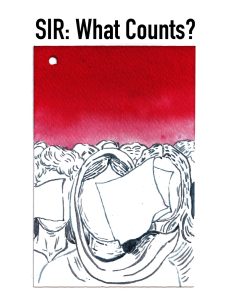
"I don't think we should compare today's protest with July 20th, we should look at June 6th as in terms of initial aggression [of the youth protests led by CJP which lead to Dharmendra Pradhan's resignation]. The optics lesson has been learnt very well by Amit Shah's and Narendra Modi's police. They report directly to the home ministry. There was a deep desire to not either allow large crowd optics so you try and just reduce the volume of the protesters by forcing it into a trickle. When we were going, narrow pathways were all closed down, on large roads people were not allowed and there was a cantonment feeling as there was so much khaki around with Border Security Force and vajra vans [police crowd-control vehicles]. You [The police] show force but you make sure that other images are not there that is there's no use of force," Chishti said.
She added: "This was like the part two of the fear disappearing that we saw among the people. It might have seemed like a trickle but the crowds were not stopping. The whole fear of the police, ED [Enforcement Directorate] and BSF was not there."
For our full coverage on the SIR and the issues it has brought to citizens, click here.
The Wire is now on WhatsApp. Follow our channel for sharp analysis and opinions on the latest developments.


