

Democracy in Uganda is Down but the Spirit of Its People is Not


In Uganda's presidential elections held on January 14, 2021, Yoweri Museveni, the incumbent, came back to power, defeating the up-and-coming singer-turned-politician Robert Kyagulanyi Ssentamu, commonly known by his stage name ‘Bobi Wine’. If Museveni sees through this five-year-term in office, he would complete four decades as Uganda’s premier.
For one of the world’s most youthful countries, where the median age is 16, a septuagenarian president winning against a popular, 38-year-old candidate goes against common logic. However, very few predicted a win for Bobi Wine – in spite of his charismatic leadership, his mass appeal among the youth and a hard-fought electoral campaign.
Notwithstanding the result, the story of the Ugandan election is still one of hope winning over despair – of one where people repose their faith in the experiment of democracy despite all odds. In a country that has only seen rigged elections, marred with fraud, corruption and intimidation, the fact that 57% of Ugandan electors still turned up to vote reminds us all that democracy is hard-fought to be achieved and even more so to be maintained.
The Museveni regime
The timeline of Museveni’s regime is equal parts use of brute force to suppress dissent, and equal parts legislative reforms to maintain the legitimacy of his dictatorship. With regards to the former, the freedom of the press is blatantly squashed, the independence of institutions is jeopardised, and law enforcement agencies play to the tune of the country’s premier. The picture may seem all too familiar for readers in many parts of the world. However, it is the details of the latter that explain how Museveni has held onto power, a worrisome trend that has been, and will be replicated in democracies that are currently cozying up to authoritarians.
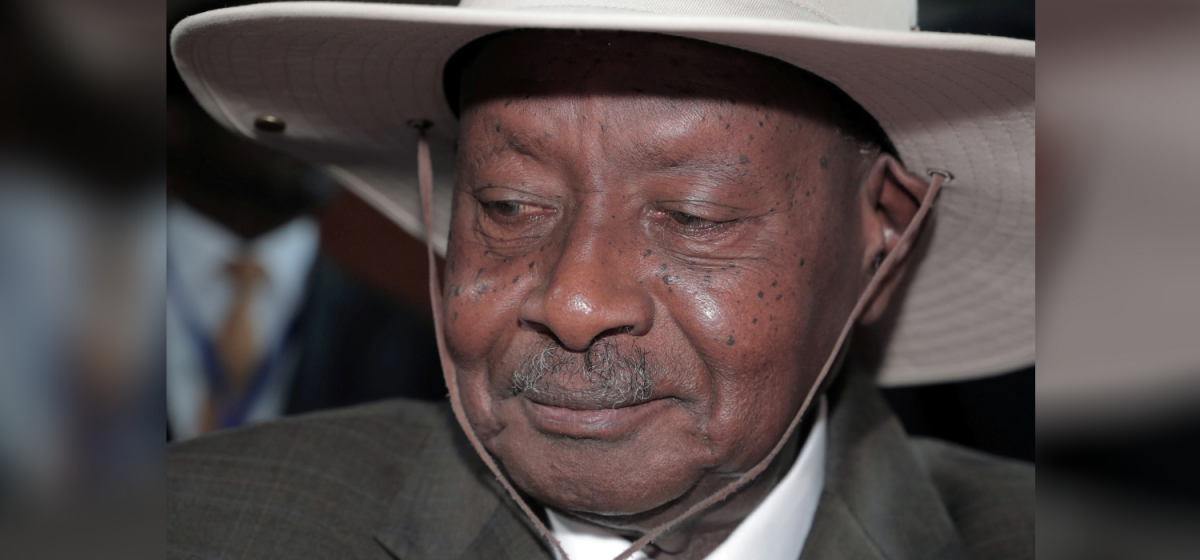
File photo of Uganda's President Yoweri Museveni, who recently won a re-election. Reuters/Tiksa Negeri/File Photo.
This author worked in a civil and political rights-based organisation in Kampala, the country’s capital, in 2017 – a period when Uganda suffered its worst constitutional crisis. That year witnessed two controversial parliamentary amendments. The first extended the term limit of parliament to seven years from the existing five years, while the second, removed the age limit of 75 for one to contest for presidency, essentially paving way for Museveni to contest the 2021 elections as a 77-year-old.
By extending parliament’s tenure, the president ensured that his MPs continue to pocket a generous paycheque, and they returned the favour by doing away with the age limit for the presidency. In just a matter of few moments, the hope of millions of Ugandans for change was bulldozed by a brute majority.
Leading up to these decisions in 2017, and in the aftermath, the country was witness to deadly riots as pro-democracy activists, opposition parties, and the youth of the country came out on the streets to oppose the constitutional changes. The offices of rights-based organisations, notably Action Aid, were raided by law enforcement officials. In the author’s workplace, every staff member was given a whistle to be blown in case one saw the armed police forces entering the office premises forcefully, thereby providing others with a valuable few seconds to do the necessary. For the Ugandan people, it was evident in 2017 itself that the results of the 2021 elections were determined, with Museveni all set to hold onto power for the foreseeable future.
A formidable opposition
Notwithstanding this daunting task, the Opposition has stood up to the omnipresent figure of Museveni over the decades, with the role anchored by the mighty Kizza Besigye for the past few years. Having contested elections over the years, Besigye finally decided to give up, and not fight the elections in 2021 – but he ensured that the baton was securely held in the hands of Bobi Wine.
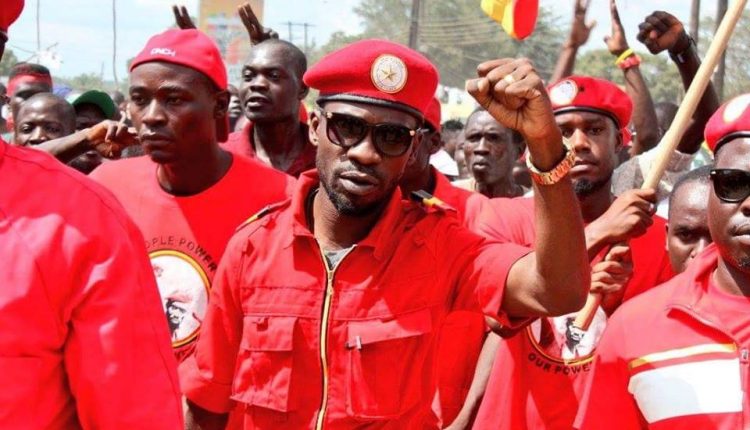
A file photo of Robert Kyagulanyi Ssentamu alias Bobi Wine during an election campaign in Arua. Photo: Reuters
And much like Besigye, Bobi Wine has been beaten up, abducted, detained, and continues to be illegally confined to his residence during and after elections. However, he derives his strength from the formidable fighting spirit of the Ugandan youth – who continue to lay down their lives to secure democracy in their country one day.
Also read: Four Things to Know About Bobi Wine, Who Has Shaken Up Ugandan Politics
One can only hope that the anger over the recent election results does not translate into civil unrest on the streets of Kampala, for the wounds of civil war from Idi Amin’s rule are still too fresh. It is to be seen whether the Ugandan youth choose to enter grass-root level politics and bring about a change from within, or play the role of a formidable Opposition on the streets and bend those in power to respect the rule of law.
Either way, the foreseeable future of Uganda is full of hope and vigour. And for all those around the globe, we need to remind ourselves that democracy needs to be fought for every single day, for it can be far too easily lost to demagogues.
The author is a humanitarian aid worker who has worked in Kampala, Uganda. Their identity is being withheld on their request.
This article went live on January nineteenth, two thousand twenty one, at zero minutes past four in the afternoon.The Wire is now on WhatsApp. Follow our channel for sharp analysis and opinions on the latest developments.


