
Medicine Nobel Prize Awarded to Yoshinori Ohsumi for 1990s Work on Cell Repair
The Wire Staff


Real journalism holds power accountable
Since 2015, The Wire has done just that.
But we can continue only with your support.
According to the official citation, the award was given for "for his discoveries of mechanisms for autophagy".
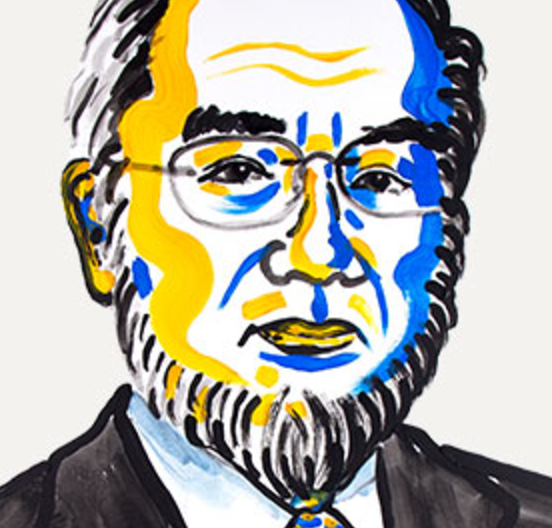
Yoshinori Ohsumi. Credit: nobelprize.org
The 2016 Nobel Prize for physiology or medicine has been awarded to Japan's Yoshinori Ohsumi. According to the official citation, the award was given "for his discoveries of mechanisms for autophagy". Ohsumi is an emeritus professor at the Tokyo Institute of Technology, Tokyo.
Autophagy is a process by which a cell can kill its own contents and degrade them using organelles called lysosomes. The name is Latin for "self-eating". It manifests when cells are responding to an infection or adapting to special conditions like starvation. Though the fact that autophagy was at play in cells was discovered in the 1960s, its underlying mechanisms weren't elucidated until the 1990s. Specifically, Ohsumi used baker's yeast to study the process and was able to uncover the involvement of at least 15 genes necessary to trigger it.
According to a statement published by the Nobel Assembly at the Karolinska Institute, Stockholm, "After infection, autophagy can eliminate invading intracellular bacteria and viruses. Autophagy contributes to embryo development and cell differentiation. Cells also use autophagy to eliminate damaged proteins and organelles, a quality control mechanism that is critical for counteracting the negative consequences of aging."
The ceremony for the Nobel Prizes will be held on December 10, the death anniversary of Alfred Nobel, at a lavish ceremony in Stockholm. Alongside the citation, Ohsumi will receive a gold-plated medal and a purse of approximately $1 million (Rs 6.2 crore). The Nobel Prizes were established by the will of Alfred Nobel, a Swedish engineer, in 1895.
The Wire is now on WhatsApp. Follow our channel for sharp analysis and opinions on the latest developments.