

It's the Small Things | The Language of Dal Dhokli


There's a Gujarati word "rasoiyan" that doesn't translate well into English. It encompasses the rhythm of a kitchen, the intuitive knowledge that flows from hand to pot, the unspoken conversations between cook and flame. My mother used this word when she spoke about making dal dhokli, as if the dish itself was less important than the dance required to bring it into being.
I was seven when I first attempted to help her roll the dhokli. My small hands struggled with the pin while she worked beside me, her movements so fluid they seemed choreographed. "Nathi thai," she'd say gently when my circles turned into abstract shapes, "It's not happening." But she never took the pin from my hands. Instead, she'd guide my fingers, showing me how to feel for the right thickness, how to roll the dough until it was ready to be cut into diamonds.
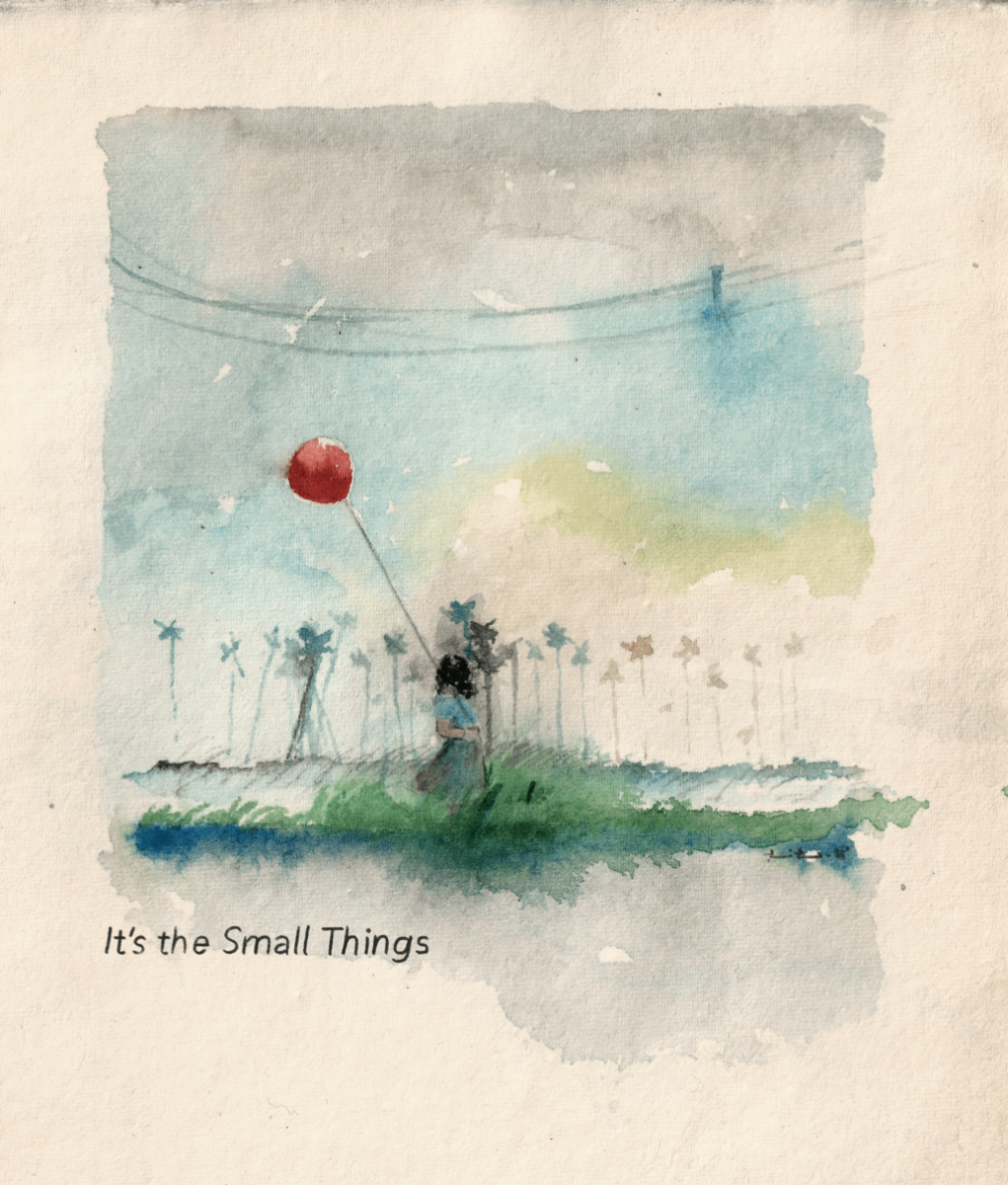 It wasn't until I moved to Delhi for my higher studies that I truly understood what dal dhokli meant to me. Living in a PG and surviving on mess food and weekend outings around the city, I found myself dreaming of that particular combination of textures. The dhokli pieces would bob in the golden dal like small boats, absorbing the tangy-sweet broth while retaining their gentle bite.
My first attempt at recreating it was a disaster. The dhokli turned to mush, the dal was either too thick or too watery. The tempering burnt while I wrestled with proportions I'd never needed to measure before. I called Maa in frustration, and she laughed – not unkindly, but with the recognition of someone who'd watched this scene play out in countless Gujarati households.
"Beta," she told me over the crackling phone line, "dal dhokli nathi banaatu, te thaay che" – you don't make dal dhokli, it happens. It was her way of saying that the dish couldn't be forced into existence through rigid adherence to recipes. It required patience, attention and something harder to quantify.
Over the following months, I began to understand what she meant. Dal dhokli taught me to cook with my ears as much as my eyes. Listening for the right pop of mustard seeds, the gentle bubbling that meant the dal was ready for the dhokli. It taught me to trust my palate over measurements, adding jaggery until the sweetness balanced the tartness of the lemon, adjusting salt until the entire pot sang in harmony.
But more than technique, dal dhokli became my bridge back to a language I was slowly losing. Living away from home, speaking primarily in English and Hindi, I found my Gujarati growing rusty around the edges. Yet every time I made dal dhokli, I'd find myself slipping back into Maa's vocabulary: "jaldi jaldi" as I rushed to add the tempering before it overcooked, "bas, hove gyu" when the consistency was just right.
The dish carries within it a particular Gujarati sensibility: the genius of making something substantial from humble ingredients, the ability to find complexity in simplicity. There's a reason it's survived centuries without much change, passed down through generations who weathered famines, migrations and the upheavals of empire. Unlike elaborate shaak that requires specific vegetables or festival sweets that depend on perfect technique, dal dhokli asks only for attention and time.
I think about the countless Gujarati kitchens where this same ritual has played out across generations. From the homes of traders in medieval Ahmedabad to the settlements of migrants who fled to Bombay during the famines of the 1890s, dal dhokli has endured. In each kitchen, the recipe shifts slightly. Some families add bottle gourd, others prefer their dhokli thicker. My maasi adds cashews; my mother swears by a pinch of garam masala.
These variations aren't deviations from some authentic original. They're the natural evolution of a dish that belongs not to restaurants or cookbooks but to homes, to families. To the accumulated wisdom of mothers and grandmothers who understood that feeding people is both simpler and more complex than following instructions.
When I finally perfected my version, or rather, when it finally began to taste like home, I called Maa to share the news. "Aa to thaay j jaashe," she said with satisfaction. Of course it would happen. As if she'd never doubted that eventually, with enough patience and practice, I'd find my way to that familiar taste, that comforting consistency, that sense of being fed not just physically but emotionally.
Now, years later, I find myself reaching for dal dhokli on days when I need more than just a meal. When work stress overwhelms me, when the city feels too large and impersonal, when I want to remember who I am beneath all the layers of professional identity and urban adaptation.
There's something deeply satisfying about watching the diamond-shaped pieces of dough slowly soften in the simmering dal, knowing that this same process has unfolded in Gujarati homes for generations. It connects me not just to my own family but to a larger community of taste, a shared understanding of what constitutes comfort, nourishment, home.
Perhaps this is why dal dhokli has never needed to evolve dramatically or seek validation beyond our own kitchens. It already serves its purpose perfectly: carrying forward the quiet wisdom of generations who understood that some of life's deepest satisfactions come not from complexity but from doing simple things with complete attention and abundant love.
Ritika Patel completed her masters in modern history from the University of Delhi.
We’ve grown up hearing that “it’s the small things” that matter. That’s true, of course, but it’s also not – there are Big Things that we know matter, and that we shouldn’t take our eyes, minds or hearts off of. As journalists, we spend most of our time looking at those Big Things, trying to understand them, break them down, and bring them to you.
And now we’re looking to you to also think about the small things – the joy that comes from a strangers’ kindness, incidents that leave you feeling warm, an unexpected conversation that made you happy, finding spaces of solidarity. Write to us about your small things at thewiresmallthings@gmail.com in 800 words or less, and we will publish selected submissions. We look forward to reading about your experiences, because even small things can bring big joys.
Read the series here.
This article went live on October nineteenth, two thousand twenty five, at zero minutes past nine in the morning.The Wire is now on WhatsApp. Follow our channel for sharp analysis and opinions on the latest developments.


