

It's the Small Things | The Poetry of Placement


A year ago, I started documenting the mundane and small things that most of us overlook on my Instagram. I played with a number of ideas and themes but I’ve found myself increasingly drawn to the small act of placement, especially the strong pattern that emerges after careful placement of items by street vendors and shopkeepers. As someone watching and recording how they arrange their items, I feel thankful for the small, thoughtful details they put into their work. These patterns show care, patience and salesmanship. I learn to slow down and notice things most people walk past. In their simple actions, I see beauty, balance and a deep connection to everyday life. I’m grateful to witness and remember these moments.
Maybe it started in Eliot Beach in Chennai, when I saw the corn-seller stacking the vibrant yellow cobs of corn enveloped in light green skin, on the counter. And I couldn’t help but take a picture of the man with his green stack of corn within the backdrop of the blue sea and the blue sky.
Since then, my brain has adapted to recognise patterns. Every time I have been to a local market, I found joy in documenting those patterns. To people it may seem like a small thing, as if it is insignificant, but arrangement is one of those everyday acts of these street vendors that can feel almost sacred to them. This activity is an opening act. They meticulously arrange their items. Look at the arrangement of postcards outside Blossom Book House in Church Street, Bangalore. Or even how a local fruit seller in your neighbourhood builds pyramids. Or how tea-sellers stack clay cups into neat, fragile towers or even a barber, with only a chair and mirror, who aligns them with care.
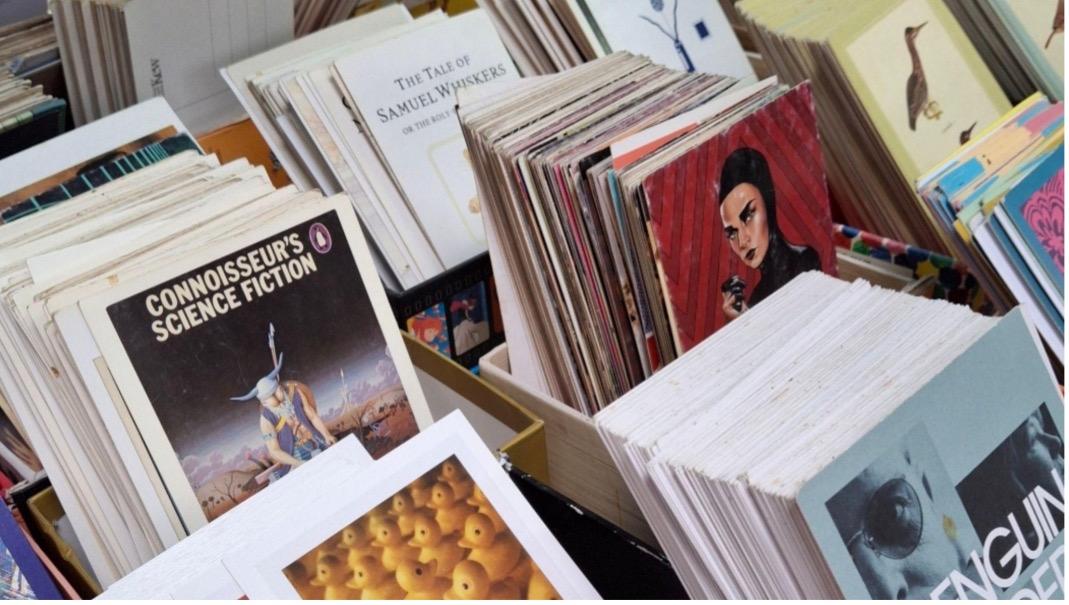
Photo: Zufishan Rahman
A month ago, I visited my hometown. I begged my mother to cook mustard fish curry. And in order to buy freshwater fish, we went to my maternal grandmother’s neighbourhood in Rambagh, Allahabad. The fishmongers bring freshwater fishes as early as 6 am. The opening act is placing a mat and arranging the fresh catch from the river – rohu, catla, magur, singhi, puttia, baker, hilsa. The buyer points to the dead and silver skin animal and the fish seller picks it up and scrapes off the scales and cuts it into pieces. If you pay close attention the next time you visit your local fish market, you’ll notice that each type of fish is arranged differently. The rohu is arranged dead and parallel, the puttia are in small packets, the magur is always alive and swimming in buckets.

Photo: Zufishan Rahman
After buying fishes, my mother wanted to buy a small clay vessel to culture yogurt. There is one humble shop that has been selling terracotta pots for decades under the overbridge. The potter may have weathered with time, but not the act of arrangement, because it is rooted in functionality. Inside the modest shop, every cup, pot and vessel is deliberately stacked to conserve space, each grouping reserved for its own type of earthenware. The arrangements exhibited a deliberate pattern. And in contrast, the fruit seller near the potter’s shop placed the round, smooth-skinned, summer-pale melons in haphazard fashion.
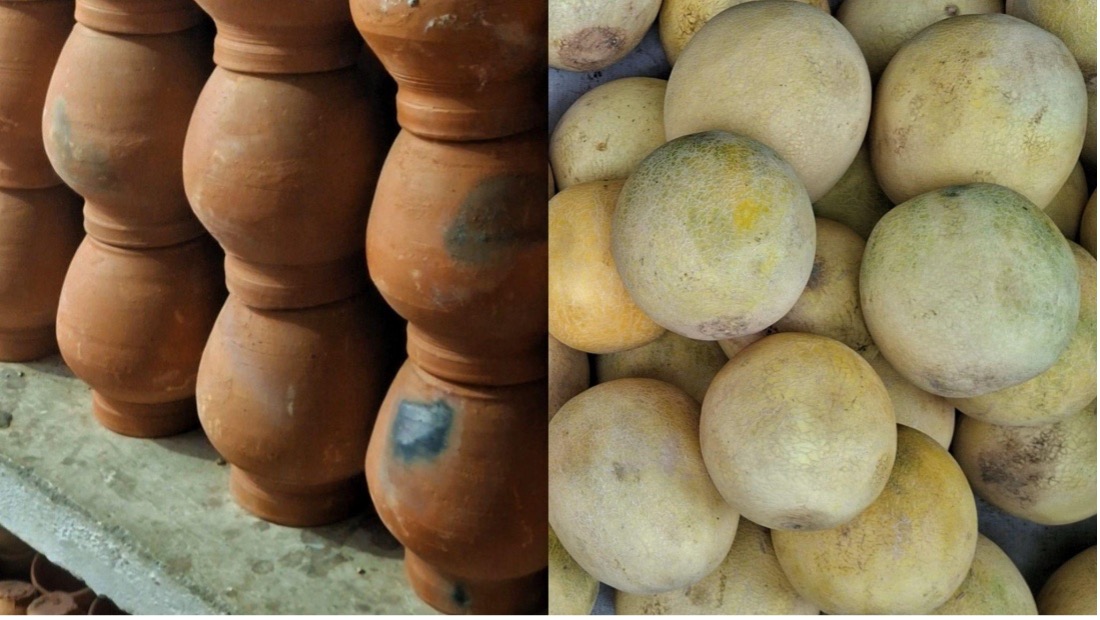
Photo: Zufishan Rahman
For a shopkeeper, the arrangements are not just about display but are strategies of salesmanship. The hanging packets of chips, arranged in a cascading line, serve multiple functions. First, they maximise vertical space in cramped shops where every inch matters. Second, their colourful, eye-level placement is deliberate to draw the gaze of children and passers-by. The rainbow of reds, yellows and greens acts as a visual invitation. The stacked spools of thread, on the other hand, tell us about order and accessibility. Their careful, colour-coded arrangement helps the shopkeeper quickly locate shades for customers – particularly important in tailoring or general stores.
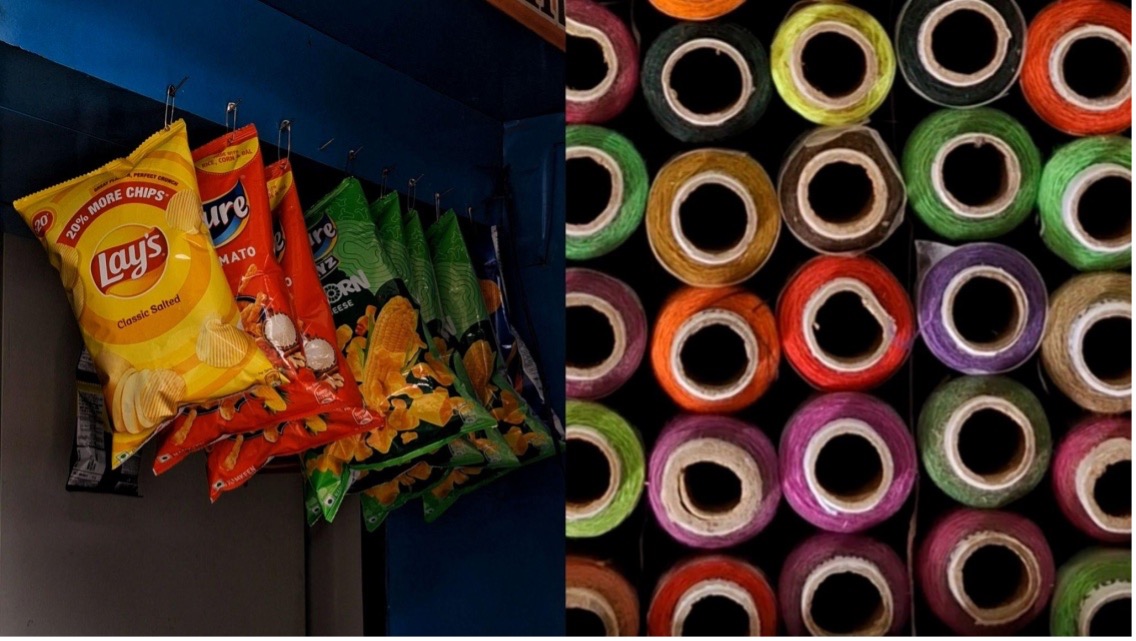
Photo: Zufishan Rahman
These are people’s little systems. And somehow, they also end up being pieces of accidental art. These choices aren't grand, but they are deeply human. These systems belong to everyday people who design not with rulers or grids, but with intuition, muscle memory and the quiet logic of routine. In these arrangements, there is no chase for perfection, only the rhythm of doing things in a way that works. And in that rhythm, a kind of beauty forms. Not gallery beauty. Lived beauty. The kind you walk past every day, unless you’re paying attention.
Zufishan Rahman is a visual storyteller and poet based in Bangalore. Her works have been previously published in Nether Quarterly, Aainanagar Magazine, Maktoob Media, Live Wire, Writing Women, Madras Post and others. You can reach her on Instagram @thedialecticalbiologist.
This article went live on July nineteenth, two thousand twenty five, at eight minutes past ten in the morning.The Wire is now on WhatsApp. Follow our channel for sharp analysis and opinions on the latest developments.


