

The 'Black Mirror' Dystopia That Is Steven Smith's Reality


British sci-fi drama Black Mirror is a social commentary on modern societies in an anticipated dystopian world shaped by excessive technological progress. Each episode attempts to examine the complex nature of human relationships, fears, insecurities, and ambition against the backdrop of an alternate present which appears unfamiliar in design and yet, frighteningly real.
The season 3 finale is titled ‘Hated in the Nation’. It depicts a twisted form of mob justice wherein a barrage of online abuse is directed at people having made the news for the wrong reasons. The severity of their ‘crime’ is exponentially magnified in the public eye with every hateful post. And every day, the most ‘hated’ person – measured by the amount of troll directed toward them – is picked and brutally attacked by a huge colony of honeybee mimicking artificially controlled drones resulting into their death. From merely writing an article, which some may deem offensive, to having made rude comments on television hurting the feelings of a nine-year-old – if there’s enough people wishing you death, there’s no escape.
The writer here aims to demonstrate the fatally destructive powers of social media in a world set in an alternate reality. There’s no room left for reason here. A collective lust for instant retribution has long trumped people’s sense of rationality and prudence. Relentlessly simmering negativity around a person’s words or actions is all it takes to determine their right to live any longer. And it’s only after the targets have faced the irreversible consequences of this madness, do the people realise the magnitude of their complicity by participation.
What Steven Smith has experienced over the last couple of weeks isn’t too greatly different from this plot.
§
Generations of cricket lovers have, for the longest time, nurtured this delusional notion of it being a ‘gentlemen’s sport’. Few have cared to learn that the label is merely a euphemism for cricket’s overtly classist roots. Unlike other global sports, cricket has rarely pretended to cut through social barriers and has in fact prided itself in retaining its exclusive and elitist traits. It still remains largely confined to the British upper class and is only expected to be taken up by the boys from the ‘right kind of families’.
The conceit and self-love extend to the ‘values’ the feudal cricket establishment thinks the sport stands for. The ‘spirit of cricket’ – the one catchphrase the guardians of the game cannot shut up about – reeks of supremacist arrogance that cricket believes other sports are too unrefined to uphold. In essence, every time over-entitled cricket fans express their anger at having been ‘let down’ by an on-field incident, it is more about the ‘grace and honour’ of cricket than about the incident itself; almost slyly insinuating it’d have been acceptable if this were some lesser working class sport.
And not only does cricket normalise this arrogance, it fosters a culture where iconoclasts are branded unworthy. Also, it’s not like cricket actively cracks down on any behaviour that violates this sacredly held cultural code. Indecorous and disgraceful verbal exchanges have been part of the sport for as long as one can remember. Boorish and uncouth celebrations, racist slurs, disrespectful send-offs have all been sights too common for anyone who has watched a serious amount of cricket. But for as long as all of it is swept under the veneers of exterior sophistication, the administrators have never felt the need to bat an eyelid.
But then, there’s only so much that can be swept aside. From time to time, the ugly side of cricket makes headlines. And those having occupied the highest moral echelons fail not to deliver the tedious and repetitive harangues.
§
The hysterical public reactions in Australia after the shenanigans of Steven Smith’s team in Cape Town could not have been a more timely reminder of the culture Black Mirror had warned us about. But more importantly, it is yet another striking endorsement of cricket’s misplaced priorities and delusional elitism. It’s only been a fortnight since the custodians of the sport institutionally marginalised the associate teams. But the reason the entire world is outraged is that a team got exposed indulging in a practice that is tacitly agreeable to all.
The key difference that separates this particular incident from the past indiscretions pertaining to ball tampering is it was filmed better. Much better. The brilliant producers at South Africa’s home broadcasting station not only captured Cameron Bancroft fiddling with sandpaper but also went on to relay the visuals of the entire conspiracy unfolding on the big screen. It made for a visual spectacle. You can’t think of a more opportune moment for social media. The content was tailor-made for mass consumption and within moments, the Australian team was relegated to a meme.
The severity of offence therefore got spectacularly magnified despite the International Cricket Council (ICC) having little legal precedent to see it as anything more than another instance of a fairly common problem in the game.
But that didn’t matter. The public was outraged and craved for blood. The players had to be fed to the wolves. A thirst for retributive vengeance needed to be quenched.
As emphasised in Black Mirror, an illusion of collective demand often extricates people from any sense of accountability. One need not worry about the consequences of their actions since they are virtually impossible to attribute – legally or morally – to an individual merely representing the collective will. As was evidenced in gratuitous public harassment of Smith at the Johannesburg Airport, Black Mirror was fairly precise in its estimation of mob mentality.
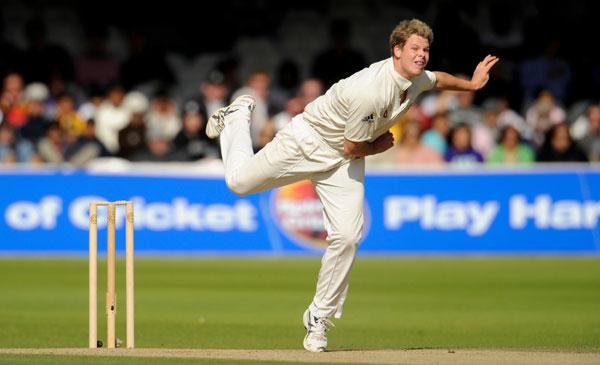
Steven Smith and his mates today are paying the price for accrued contempt each preceding Australian team has invited their way. Credit: Reuters
And of course, ex-cricketers could not let go of an opportunity this big to feel relevant again and their high-headedness could not have been more misplaced. Former Australian captain Michael Clarke – teammates with some of these players until as recently as 2015 and in many ways the founder of the current team culture – was quite articulate in describing what Smith’s team did as ‘disgraceful’ and ‘unacceptable’.
Clarke, who once openly threatened an opposition player to be ready for ‘a broken fu**ing arm’, publicly reveres Shane Warne – the most controversial Australian cricketer ever who was asked to go home from a World Cup and serve a year’s suspension for failing a drug test. If one attempts to chronicle and compile the list of transgressions on part of Australian players of past, it might take longer than the length of the bans handed over to Smith and his deputy David Warner.
How is it then the incident in Cape Town has captured the public imagination like none other in past? Well, take out the dramatised visuals cyclically playing on television screens and it’s probably just another infringement of ICC code. Instead, the outrage factories made the debate an issue of Australia’s image in international community. None less than Australian Prime Minister Malcolm Turnbull felt compelled to weigh in and ensure the events had disproportionate repercussions.
“Completely beyond belief that the Australian cricket team had been involved in cheating”, asserted a visibly distraught head of state again succinctly stressing more on ‘Australia’ than on ‘cheating’.
This probably panders to his audience. Perhaps the Australians actually think it is their team that must be held against standards higher than those applicable to the rest of the world. The tone in Turnbull’s assertion confirmed as much. The trickling effect of his words was enormous and one may fairly assume, played a vital part in Smith and Warner having to vacate their positions as leaders of the team within hours.
§
In the age of 24 x 7 news, the media has the power to shape, influence, and then change public opinion according to its whims. The moment Smith admitted the complicity of the team’s leadership group in conspiring to cheat, the narrative had been determined. A feeling of indignation and betrayal had been packaged and sold so effectively to the public, there’d be no need to look for another talking point for a reasonably long time. Cricket Australia (CA), meanwhile, is taking some unwarranted pride in demonstrating a zero tolerance approach against cheating and coming hard on its best players; whereas in truth, its actions can only be defined as appeasement of irrational outrage.
Much like in Black Mirror, it took an inconsolable image of Smith breaking down in front of cameras for people to realise things had perhaps gone too far. But the damage had been done by then. Perhaps irreversibly so. The mental scars inflicted will take forever to heal. It is scary to imagine the kind of impact irresponsibly founded public outcry can have on someone’s life.
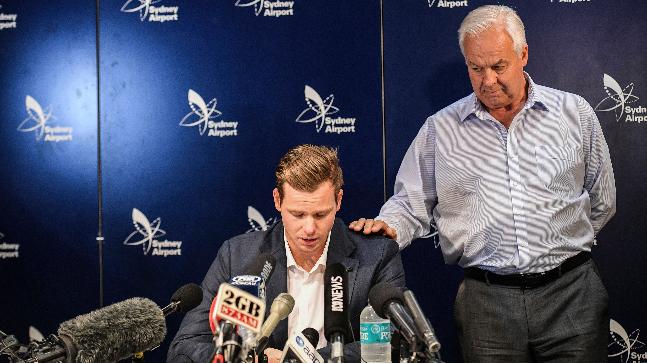
Despite the inconsolable image of Smith breaking down in front of cameras, this most certainly will not be the last instance of such callous public behaviour. Credit: Reuters
However, in the most capriciously placed twist in the Black Mirror episode, those having actively contributed to the virtual mob lynchings, eventually become the targets themselves. This results into apocalyptical consequences of unmatched proportions. But that’s the only visible difference here. Not one person, having pitched in with thoughtless negativity, is going to have to be answerable for it. And this most certainly will not be the last instance of such callous public behaviour.
§
None of this is to suggest there is no need for Australian cricket to reflect on the culture being harboured in their dressing room. It speaks worryingly of a team that needs to chart down specific plans for verbal exchanges with each opposition player in the build-up to a high profile series. Maybe they’re only feeding media a few headlines. Maybe they think it creates an atmosphere of panic in the opposition camp. But somebody needs to tell them it greatly damages their perception among fans world over. And that makes moments like these infinitely more difficult since no one wants to empathise with their situation.
Steven Smith and his mates today are paying the price for accrued contempt each preceding Australian team has invited their way. The world is too happy revelling in schadenfreude to see an Australian captain suffer. Smith has to deal with it. But Smith should come back from this. Most believe he will. Whether he returns the same batsman is a matter of speculation. But one thing that he’ll straightaway have to let go of upon his return is the ‘Australian way’. It may not sit too well with his own management. The very establishment that’s calling for his head right now might term him soft. But in order to scale the highest perch one more time, he’ll have to let go of it.
Having decided to not challenge the sanctions imposed by the board, he’s already given an impression he recognises the need for course correction. He understands the importance of the public buying his repentance. The cynics might dismiss it as empty posturing but it is in his best interests for now. Both Warner and Bancroft too have decided to follow the lead from their captain on that front and it’s certainly going to help them not estrange the Australian public any further.
It’s a long walk from here for the three of them to overhaul their image. But the journey has begun.
Parth Pandya is an Ahmedabad-based freelance sports writer.
This article went live on April fifth, two thousand eighteen, at zero minutes past seven in the evening.The Wire is now on WhatsApp. Follow our channel for sharp analysis and opinions on the latest developments.


