

Closed Since Pahalgam, Kashmir’s Adventure Tourism Workers Wait for the Trails to Reopen


Srinagar: For Kashmir, adventure tourism has often been presented as the next big opportunity. The government has been promoting the region’s mountains, alpine lakes and trekking routes as destinations for visitors looking for experiences beyond the traditional tourist circuit.
But for the people who actually make a living from these mountains, the story on the ground is different. Nearly a year and a half after restrictions were imposed in 2025, several high-altitude lakes and trekking routes remain closed to trekkers and in some cases to the locals. For people whose livelihoods depend on the trekking season, the prolonged closure has meant a steady loss of work and income.
According to unofficial figures there are 176 primary sightseeing and tour agencies actively operational across the Union Territory, many of which specialise in or offer dedicated trekking, skiing, and mountaineering portfolios.
'Down to three employees from 10'
Mohammad Arif, founder of Kashmir-based adventure tourism company Cliffhangers India, said the company operates across four regions, Kashmir, Ladakh, Himachal Pradesh and Uttarakhand, and the impact of the closure of trekking routes in Kashmir has severely affected his business.
“Prolonged closure has affected trekking very badly. There is virtually no trekking business in Kashmir. Before the government shut trekking activities in Kashmir, we had 10 office employees and more than 60 contractual staff here. Now, we are down to three employees on the rolls and around 10 contractual staff,” Arif told The Wire.
According to Arif, the impact is not limited to trekking companies but extends to the wider local economy built around popular trails, including guides, horsemen, porters and other support workers.
He said the Great Lakes Trek, one of Kashmir’s well-known trekking trails, had generated around Rs 5 crore in revenue since it opened, with the government alone receiving between Rs 40 lakh and Rs 70 lakh in sanitation fees, according to his estimate. The Wire could not independently verify these figures.
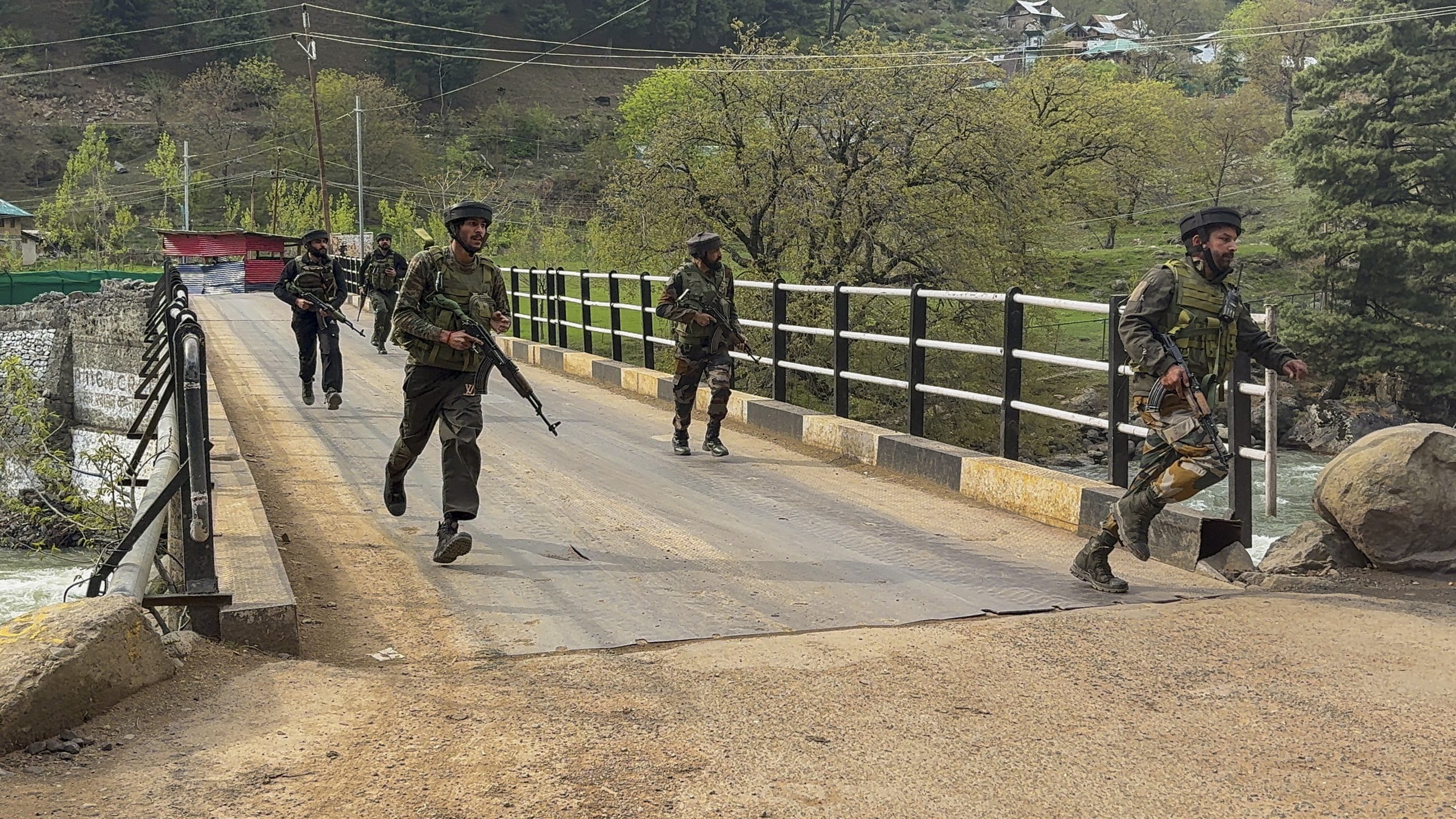
The restrictions came after the terrorist attack at Baisaran meadow in Pahalgam in 2025. Twenty-six people were killed in the attack, including 25 tourists and a local pony operator. The attack changed the security environment around Pahalgam and other tourist destinations and several trekking routes and high-altitude destinations was restricted by the Jammu and Kashmir administration.
However, its impact has touched more people than those who directly deal with tourists. A trek can involve a guide, pony operator, porter, cook, driver and local supplier. Money spent by trekkers also reaches small businesses in nearby villages. When the trekkers disappear, that chain of income is disrupted.
The Baisaran meadows of Pahalgam resort in this file photo dated, April 22, 2025. Photo: PTI.
'Several households'
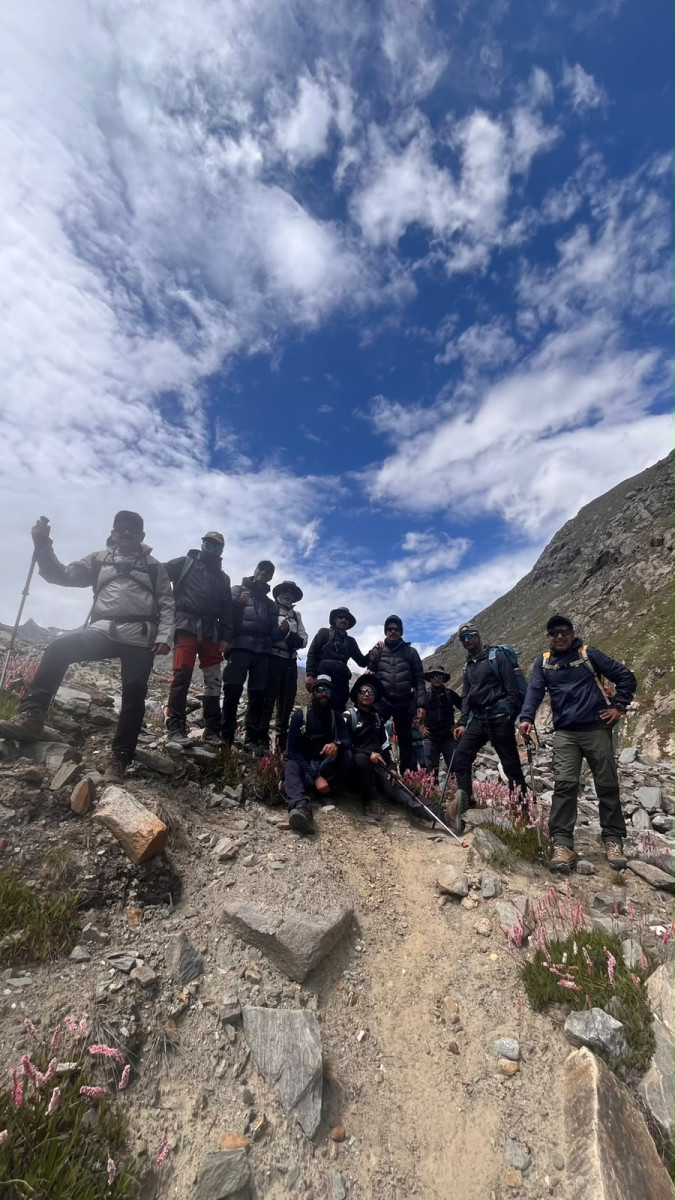
Gulzar Shah, a trek leader associated with Cliffhangers India, says that a single trek supports a network of people, from trek leaders to porters and horsemen. Many guides spent years learning the trails, understanding the terrain and building relationships with trekking agencies – skills which don't have much use once trekking routes are closed.
“Around seven people are associated with one trek, so that means one trek is a source of income for seven families. After the Pahalgam attack, all the trek routes were closed. We thought the routes would reopen once security arrangements were put in place, but we are still suffering because these places remain closed. Some people have been forced to work as labourers in the fields, while others are simply without work,” said Shah.
Trek leaders' and assistants' skills are specific to the mountains and without trekkers, those skills have limited economic value. The problem is also linked to the season itself. Trekking in Kashmir is largely seasonal, with a limited window when high-altitude routes can be accessed safely. Guides and other workers depend on this period to earn a significant part of their yearly income. The closure has therefore created uncertainty that goes beyond a few months of lost work.
Shuib Kaw, director of Versatile Adventure Holidays, gave The Wire a figure of his own losses. “The prolonged closure of destinations like Yusmarg, Tosamaidan and Doodhpathri has badly affected adventure tourism, just as it has leisure tourism. I have personally suffered losses of around Rs 25 lakh because of these closures,” Kaw said.
Pony operators, who also depend on this seasonal income, face a similar situation. Their animals are used to carry tourists, luggage and supplies along difficult routes. A pony, however, continues to require food and care even when there is no tourist.
For horsemen like Faizan, the impact has been felt not only in daily household expenses but also in the small aspirations that seasonal earnings once made possible.
“I love travelling to different parts of India. Before the closure of these places, I would always go to different parts of the country during winters to explore new cultures and places. But after the treks were closed, my income dropped and I could not save enough to travel to other cities. Last winter, I could barely manage my household expenses. Every closed season is pushing us further back economically,” said Faizan, a horseman from Pahalgam who accompanied trekkers and carried food and other supplies on horseback.
He said he would earlier work with trekkers on routes like Baisaran, Tulian Lake, Surus Lake and Churnag.
Gulzar Shah, trek leader, along with a group of trekkers posing for a picture. Photo: By arrangement.
The impact is not always visible to tourists visiting Kashmir’s popular destinations who may see hotels operating, tourist vehicles plying and popular spots filled with people. But adventure tourism operates differently and is tied to remote areas and seasonal movement. A trekking route may be several hours away from the main tourist centres. The people who depend on it may not be visible when the route is closed.
People working in the sector say the potential of the mountains means little if tourists cannot access the routes.
The reporter approached the Army, Police, and Civil Administration seeking permission to undertake the Gangbal Lake trek, which falls in Ganderbal district of Central Kashmir. However, permission was denied by the concerned offices. The Deputy Commissioner (DC), Ganderbal, accepted the permission application and stated that he would update the applicant on the approval after consulting the relevant agencies.
The government maintains that restrictions are connected to security and safety concerns. Officials say access to sensitive areas has to be considered in view of the prevailing security situation in the region. At the same time, the government has been pushing to attract visitors to newer destinations. For workers in the adventure tourism sector, these issues are connected.
Many understand the security concerns but fear a time when they may stop depending on adventure tourism altogether.
“If the closures continue the way they are right now, they will force operators and other stakeholders to close their businesses and opt for other professions,” Kaw said.
This article went live on September twenty-eighth, two thousand twenty six, at thirty-two minutes past four in the afternoon.The Wire is now on WhatsApp. Follow our channel for sharp analysis and opinions on the latest developments.


