

My Favourite Season Is the Fall of the Patriarchy


Young women and girls are once again on the streets, in New Delhi and elsewhere, demanding safety.
It is pretty dispiriting. The year is 2026, for crying out loud, and women are still living in a world where men feel entitled to police them, intimidate them, humiliate them and violate them.
In the last fortnight, in Jamui, Bihar, a teenage girl was sexually assaulted by a group of men. The assault was filmed and circulated, because apparently, that’s a fun thing for guys to do. A few days later, in Delhi, a 17-year-old girl, walking in a park in the heart of the city with a friend, was gang-raped by men posing as police officers – at 7.30 pm.
From the other end of the globe, in the United States, we are hearing about the Cornell 7: the case of a 20-year-old college student who was sexually assaulted by a group of frat boys on the campus of this elite American university. There was the assault itself, and then there were the 57 other young men talking about what was happening in a group chat, with messages that treated her body as entertainment. When she complained, the university did what institutions all too often do: investigated, sanctioned and moved on. A slap on the wrist. It is a textbook case of how systems of power react to sexual violence. She is now suing the Cornell University.
Suddenly, it is much harder to tell ourselves that this is a story confined to Bihar, or India, or ‘backward’ cultures or poor policing. The geography changes. The institutions change. The language changes. The entitlement does not. Nor does the impunity.
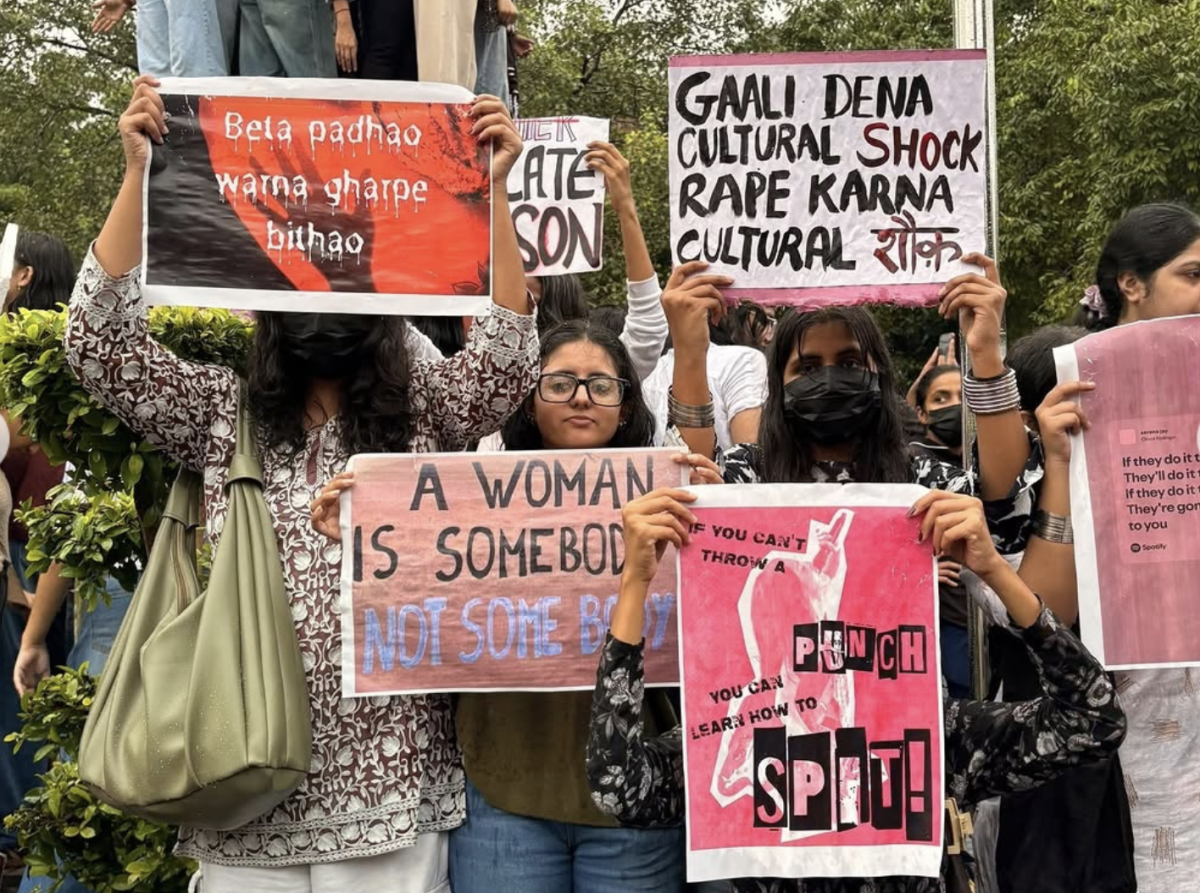
Photo: Instagram/@beingpolitical.in.
And this is what has brought hundreds of young women, many of them college students, onto the streets; asking why they should still have to fight for their safety and the right to move freely, whether it is to go to school, to college, to a park or, frankly, to wherever the hell they want.
Girls are speaking out.
The young women in Delhi are not quietly accepting another round of warnings about where they should and should not go. They are on the streets, angry and organised, demanding to be heard. The young woman at Cornell is speaking, even two years later. In Bihar, girls are talking about what these incidents mean for them. Some are worried that the answer, once again, will be to restrict girls rather than confront the men who harm them. But they are talking. They are questioning. And they are watching what other girls are doing.
I have worked on girls’ safety for more than two decades; I get angry and even disheartened. But I am also more hopeful than I sometimes sound. Because there’s something about girls today that tells me they are not backing down.
They know more. They speak more. They question more. They find each other. And when one girl speaks, others increasingly recognise that they can too.
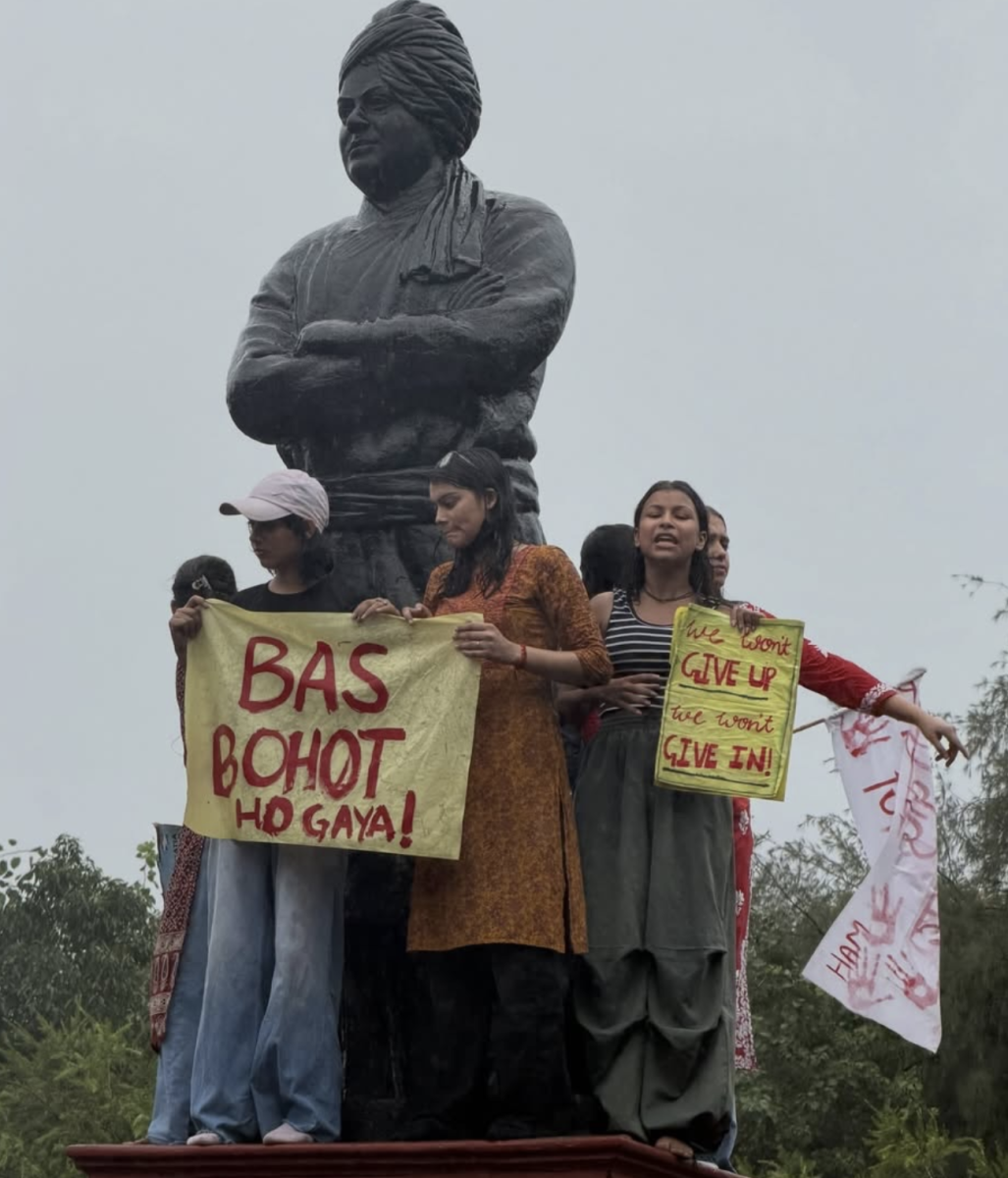
Photo: Instagram/@beingpolitical.in.
Yes, the spectre of the untouchable Epsteins of the world and the people who enable them, are never too far from my consciousness. There will always be men with extraordinary power, privilege and networks around them, people willing to protect, enable, look away or simply decide that somebody else’s pain is an acceptable price for keeping the world as it is.
I put that thought aside. Right now, today, girls are not going back into silence.
A male politician told a room full of young women in Pune recently to “smash the patriarchy.” It made me smile.
Because I have given myself license to believe that the girls are going to smash it. And they should know that there is a legion of women right beside them.
Atiya Bose, leads Aangan, an NGO that works with adolescents living in difficult or dangerous situations, to prevent and respond to serious harm like child marriage, child labour, trafficking, violence and exploitation.
This article went live on October first, two thousand twenty six, at fifty-eight minutes past twelve at noon.The Wire is now on WhatsApp. Follow our channel for sharp analysis and opinions on the latest developments.


