

China: Why the CPC's Fourth Plenum Was No Routine Meeting


From October 20–23 2025, the 20th Central Committee of the Communist Party of China (CPC) convened its Fourth Plenary Session in Beijing. This meeting was one of the most important ones of the party in its five-year cycle between the 20th and the 21st Party Congresses scheduled for 2027, because it set the strategic direction for the coming period, especially in relation to the next Five Year Plan, which in this case covers the period 2026-2030.
Plenary sessions or plenums of the CPC are key points in China’s policy-cycle. The Fourth Plenum, in particular, has historically been used for matters of governance, institutional reform or major policy shifts. They have usually focused on party governance, but since Xi pushed back the previous Third Plenum from 2023 to mid-2024, the CPC used the Fourth Plenum this year to approve the next Five Year Plan.
The Plan itself is yet to be drafted. The aim of the Plenary meeting was “to refine the magnificent blueprint for the 15th Five Year Plan…[which was]… sketched out at the plenum into a construction map and roadmap….”
This Fourth Plenum was not just a routine meeting – it was a strategic point for the CPC to deepen the impress of Xi Jinping’s stamp on the CPC, its priorities and send signals both domestically and internationally.
Such meetings are also used to take important political decisions. In 1989, the Fourth Plenum removed the General Secretary of the Party, Zhao Ziyang, for supporting the protestors in Tiananmen Square. In 1999, it was used to reorganise the state owned enterprises in China. The latest Fourth Plenum did not signal any radical shift – but rather continued the trajectory of policies under Xi: emphasising state-led guidance, technology, self-reliance and party control.
 Last week’s session was convened in the wake of a major purge in the Chinese military, as well as a larger purge reflected in the absence of many of its members at the meeting. It came in the midst of China’s confrontation with the United States on the issue of technology and trade. It also came at a time when China is facing economic headwinds, growth has slowed, real estate troubles persist, consumer sentiment is low and unemployment among youth is high.
The biggest surprise of the Fourth Plenum may well be the sheer number of missing Central Committee members. According to reports, 168 members and 147 alternate (non voting) members attended the session, but when the Central Committee was constituted at the 20th Party Congress in 2022, there were 205 full members and 171 alternates. The biggest hit has been on the PLA constituents. Of the 33 generals who are members, 22 were absent at the Plenum. Of them 8 are officially dismissed, 14 “missing”, under arrest or trial.
Days before the plenum, the Chinese defence ministry had revealed the names of 9 top military officers who had been expelled from their positions as well as the CPC. Of these, seven had been members of the Central Committee and two of them were in the Central Military Commission (CMC): vice-chairman Gen He Weidong and CMC member Admiral Miao Hua.
As a result of these purges, General Zhang Shengmin, an ordinary member of the CMC, was promoted to the rank of vice-chairman. The CMC is the body that runs the PLA, with the Ministry of Defence playing just a figurehead role. Xi Jinping is the chairman of the body and Gen. Yang Youxia is the other vice-chairman. Gen. Zhang was earlier the head of the anti-corruption and military discipline department of the CMC.
Xi’s campaign of enforcing party discipline began in late 2012 to combat rampant corruption across the country, including the higher echelons of the PLA. There were repeated purges and last year, 2024, party authorities disciplined 889,000 people according to the Wall Street Journal, up 46% from 2023.
The plenum thus provided an opportunity to the CPC to address its internal governance issues which have been manifested in recent years by high-level purges. Maintaining party control over the PLA remains an important priority for the CPC.
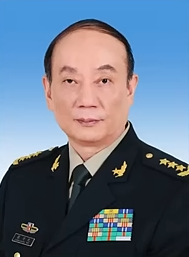
Zhang Shengmin. Photo: Wikipedia.
The second highlight was the emphasis placed on technological self-reliance and innovation. The Plenum communique noted that the major goal of the meeting was boosting China’s “economic strength, scientific and technological capability, national defence capacity, overall national power and international influence” by 2035.
The previous 14th Plan set the course for the policy of “dual circulation” to reduce the dependence of the economy on exports and promoting domestic consumption. It also pushed Chinese development in areas of high-tech manufacturing, automation, robotics, nanotechnology, biotechnology, 5G, renewable energy, drones, and ship building.
So, the main focus of the CPC was to use the plenum to give a fresh impetus to its economic growth through the 15th Five Year Plan (2026-2030) to shape the country’s economic, social and technological trajectory and consolidating the foundations of China’s goal of “basically realising the socialist modernisation by 2035.”
As has been the theme of the Xi Jinping era, the emphasis is on pushing what the Chinese call “high quality development” rather than higher GDP numbers. The focus as in recent years is on structural upgradation, innovation, technological self-reliance. And all this must be achieved by strengthening macro-economic governance and making “progress while ensuring stability.”
The meeting comes months after Xi has warned against what is being called “involution” in the manufacturing sector, which stems from extreme price competition arising from the investment plans of provincial officials. China’s industrial overcapacity has emerged as a major problem adding deflationary pressures to the Chinese economy. An example of this given in a recent Financial Times article is that the country now has some 58 satellite makers, 30 rocket companies and more than 60 humanoid robot manufacturers. But this involution also serves the function of pushing companies to find markets abroad to survive and provides a hugely competitive edge to Chinese products.
The plenum has taken place amidst the ongoing tariff war with the United States and some economic strain on China on account of its real estate crash, mounting local debt, rising unemployment, and slowing economy. The two countries have held four round of talks, but an agreement is not yet in sight. China wants better access to US computer chips and advanced software, while the US is keen to ensure smooth access to China’s rare earths and magnets. Both know that this will assist in boosting the adversary’s strength, so they are reluctant to provide them. The forthcoming meeting between Presidents Trump and Xi Jinping in Seoul could lead to a grand political bargain that would help Beijing to push forward with the ambitious agenda it has outlined in the Plenum.
Conclusion
Even with ambitious aims, structural constraints remain: demographic decline, youth employment, productivity growth, and the need for genuine market functioning. There is the continuing need to find the balance between state control and market dynamism. Then there is the issue of the international environment – technology restrictions, supply-chain fragmentation, and global instability will put pressure on China’s plans.
According to the plenum communique, China at present remains in a phase of development where strategic opportunities exist alongside risks and challenges, while uncertainties and unforeseen factors are rising. Even so, the Chinese economy rests on solid foundations, with considerable advantages in many areas. “China’s enormous market, its complete industrial system and its abundant human resources [are] all coming to the fore.”
The Fourth Plenum of the 20th Central Committee of the CPC marks an important moment in China’s current political economy cycle. By adopting the 15th Five-Year Plan, emphasising technological self-reliance, reaffirming party discipline and signalling continuity in strategic orientation, China is positioning itself for what it terms the “crucial period” ahead for socialist modernisation.
Manoj Joshi is a Distinguished Fellow, Observer Research Foundation, New Delhi.
This piece was first published on The India Cable – a premium newsletter from The Wire – and has been updated and republished here. To subscribe to The India Cable, click here.
This article went live on October twenty-eighth, two thousand twenty five, at fifty-two minutes past eleven in the morning.The Wire is now on WhatsApp. Follow our channel for sharp analysis and opinions on the latest developments.


