

Polls Close in Cambodia Election, PM Hun Sen Set to Extend Rule


Phnom Penh: Polls closed in Cambodia's contentious national election on Sunday with rights groups saying the vote was neither free nor fair in the absence of any significant challenger to Prime Minister Hun Sen and voter intimidation.
Hun Sen's opponents called for an election boycott.
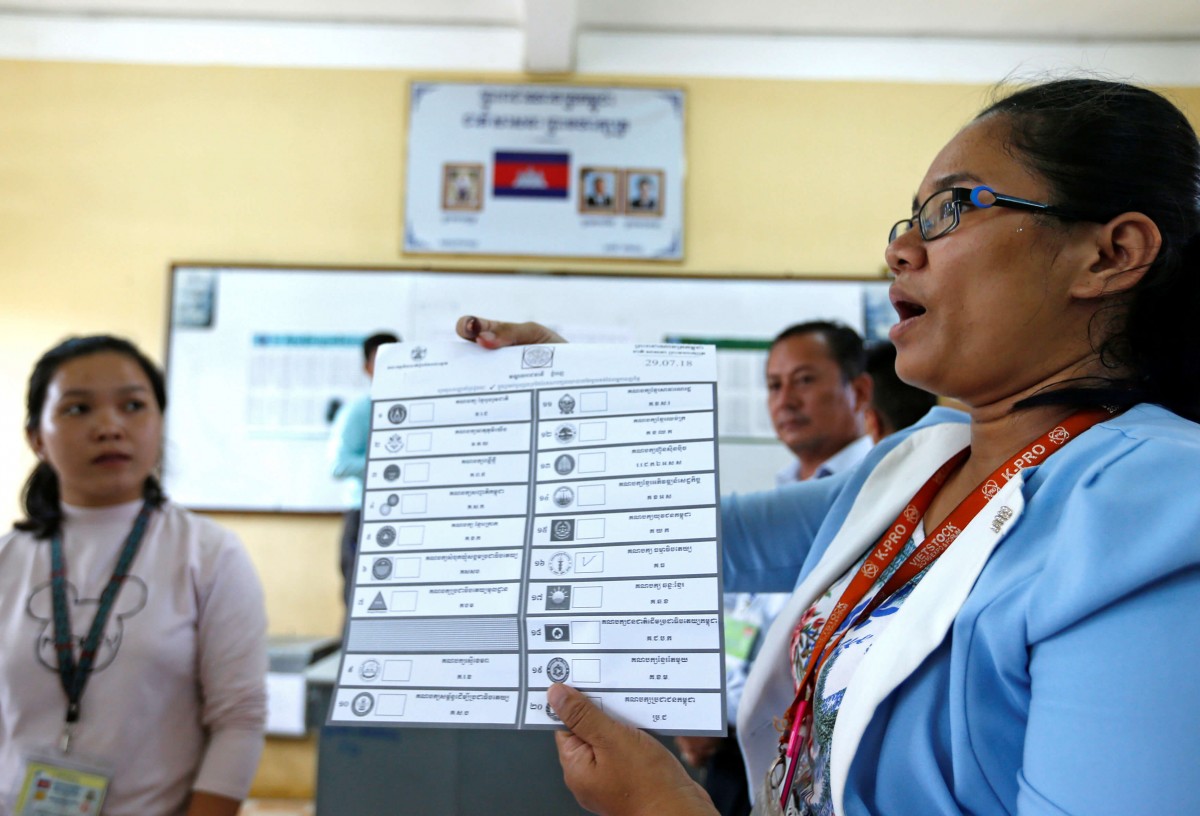
An official starts the process of counting ballots after polls have closed in Cambodia's general election, at a polling station in Phnom Penh, Cambodia July 29, 2018. Picture taken July 29, 2018. Credit: Reuters/Samrang Pring
The National Election Commission (NEC) said in a document sent after polls closed that voter turnout was 70.41% nationwide.
But scenes on the ground in the capital Phnom Penh painted a different picture. At a polling station near the river, election workers outnumbered voters and a slow trickle of people arrived throughout the day.
Another polling station at a school was quiet with a handful of voters casting their ballot in the mid-afternoon heat.
One Dutch tourist visiting Cambodia on holiday said he did not realise it was election day.
"Is it election day? I didn't know. Seems very quiet, like a normal Sunday," said the tourist, who declined to be identified to protect his privacy.
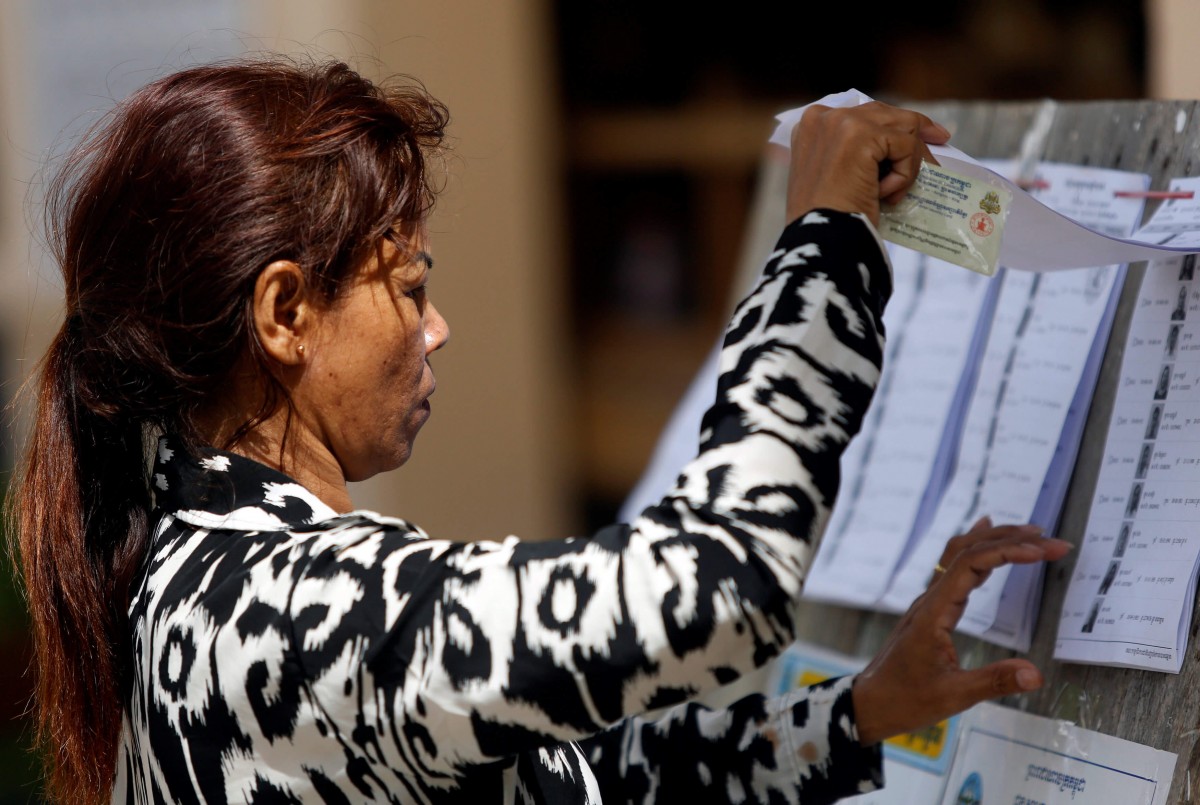
A voter looks at a voters list during a general election in Phnom Penh, Cambodia July 29, 2018. Picture taken July 29, 2018. Credit: Reuters/Samrang Pring
Critics say the election is a backward step for democracy in Cambodia, marred by intimidation by the ruling Cambodian People's Party (CPP) and the dissolution last year of the main oppositionCambodian National Rescue Party (CNRP) and the jailing of its leader, Kem Sokha, on treason charges.
ASEAN Parliamentarians for Human Rights (APHR) said in a statement that the vote took place in a "highly repressive political environment".
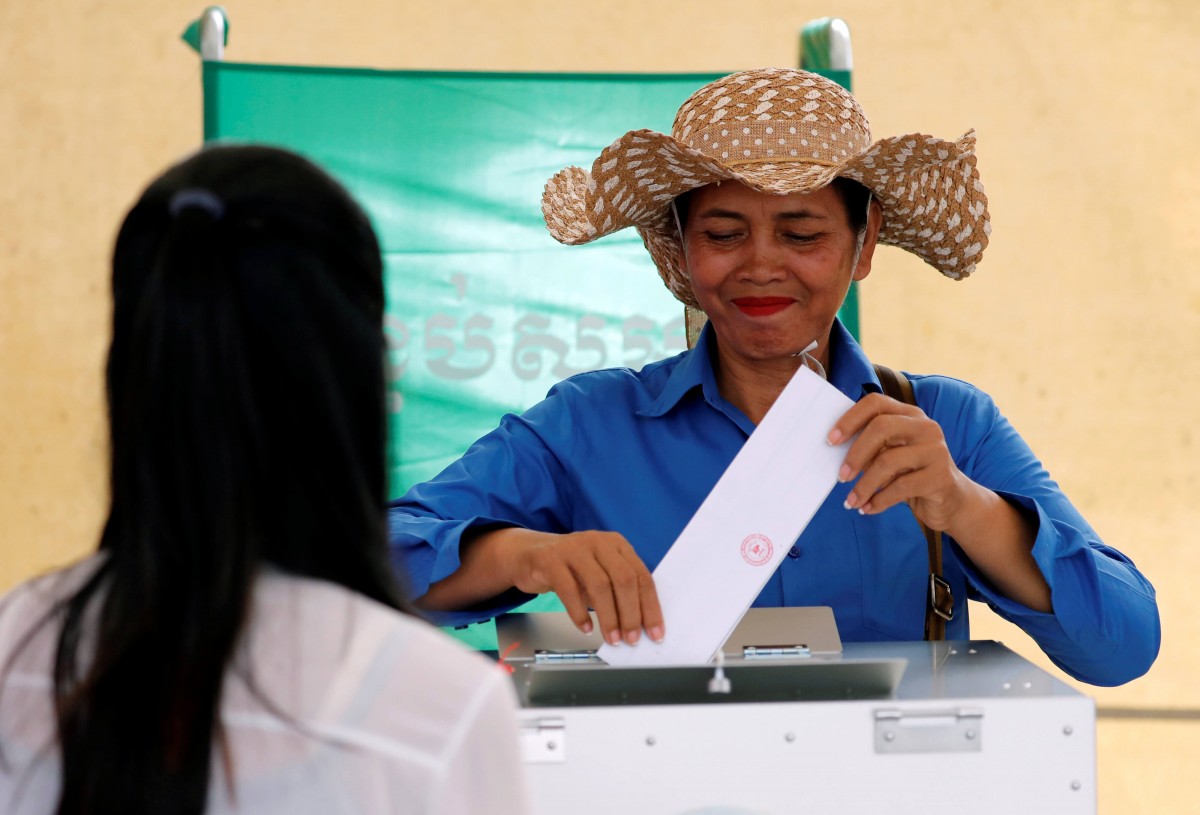
A woman casts her vote at a polling station during a general election in Phnom Penh, Cambodia July 29, 2018. Picture taken July 29, 2018. Credit: Reuters/Darren Whiteside
Hun Sen, a former Khmer Rouge commander who defected from Pol Pot's murderous regime, has ruled Cambodia for more than 30 years and is the world's longest serving prime minister.
Phil Robertson, deputy director of Human Rights Watch's Asia Division, told Reuters in an e-mail that many voters grudgingly went to the polls out of fear. Authorities have warned that anyone boycotting the vote will be seen as a "traitor."
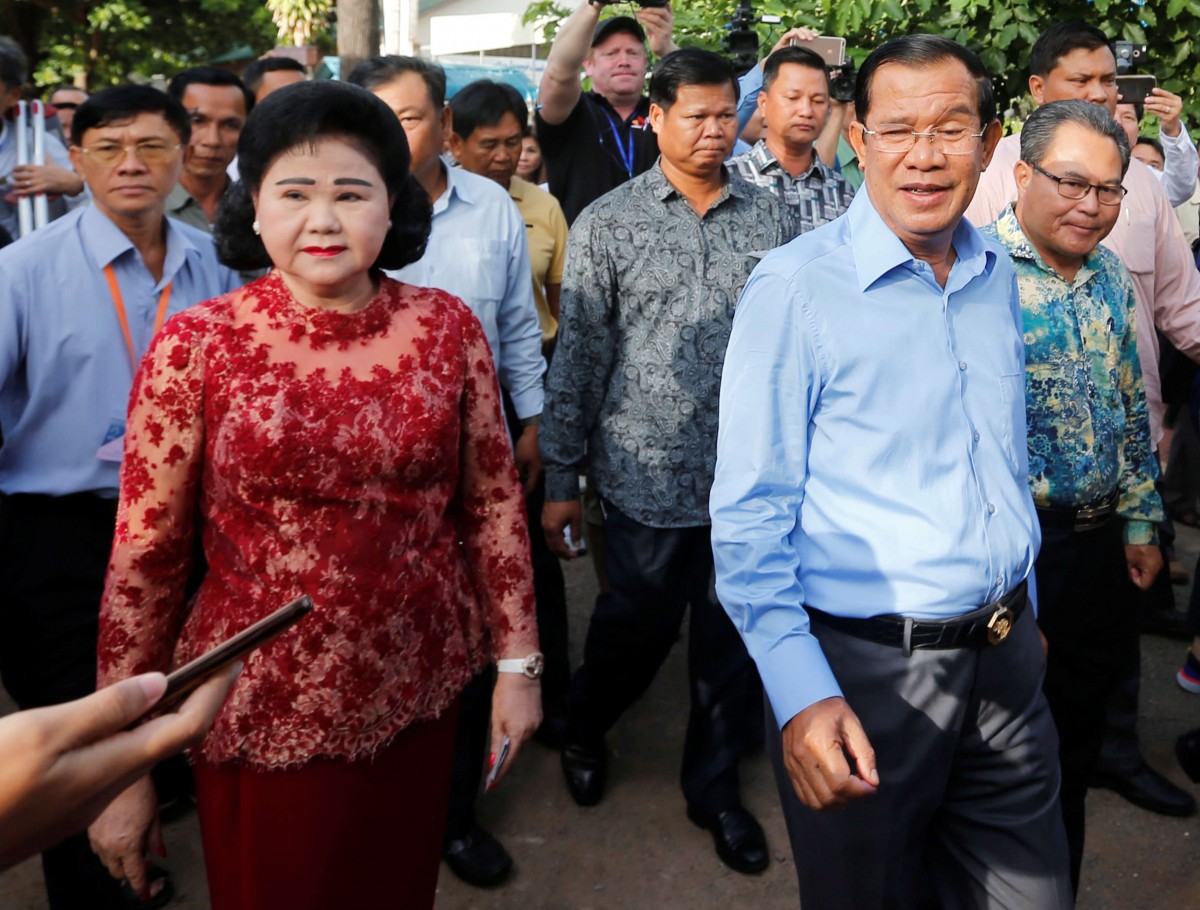
Cambodia's Prime Minister and President of the Cambodian People's Party (CPP) Hun Sen and his wife Bun Rany leave after voting during a general election in Takhmao, Kandal province, Cambodia July 29, 2018. Photo taken July 29, 2018. Credit: Reuters/Samrang Pring
One voter at a polling station by the river at Preap Sisowath Quay in Phnom Penh said not voting was "too much trouble".
"I did not want to vote but I did vote," said the man, who asked not to be identified.
CPP is banking on a high voter turn-out to bestow a veneer of legitimacy on the election. Some 8 million people are registered to vote. Nearly 70 percent cast their ballot during the last general election in 2013.
Nineteen political parties ran against Hun Sen's ruling CPP, but none are strongly critical of the government.
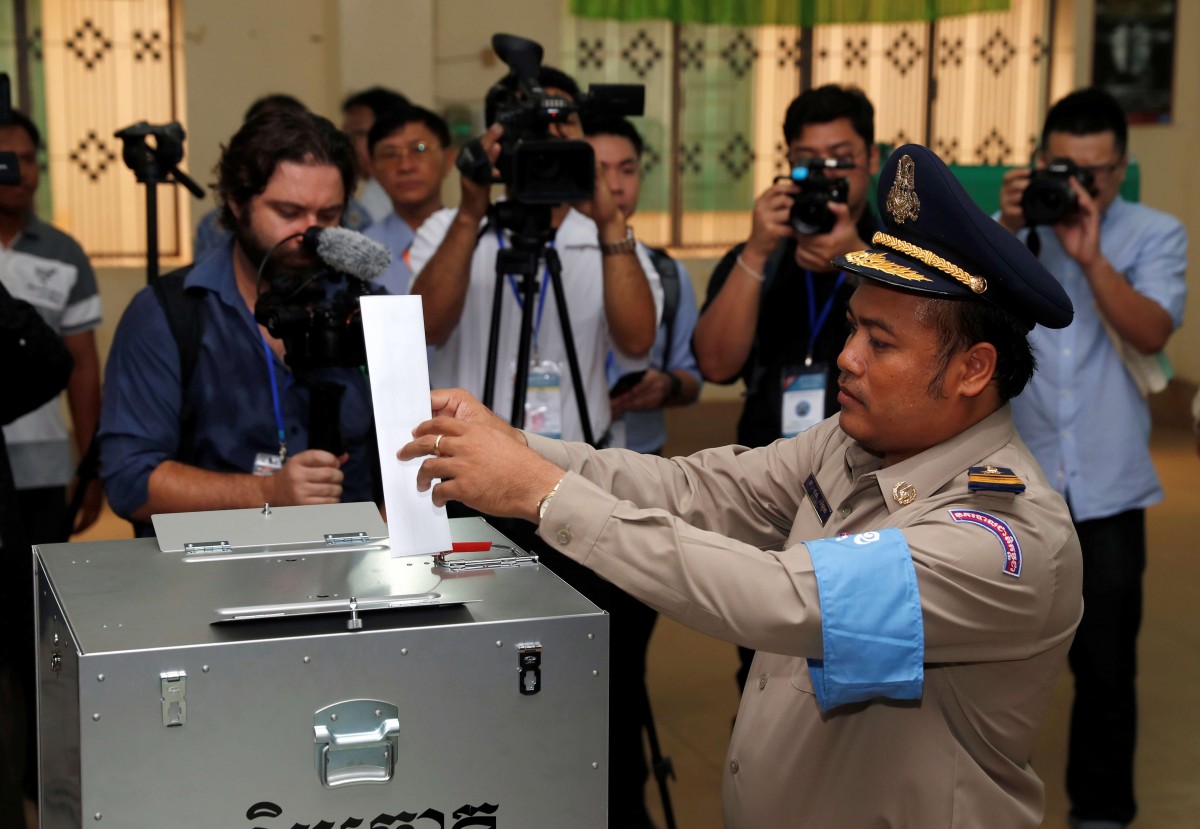
A policeman working as election security casts his vote during a general election in Takhmao, Kandal province, Cambodia July 29, 2018. Photo taken July 29, 2018. Credit: Reuters/Darren Whiteside
The opposition CNRP, appealing to younger voters and those seeking change, narrowly lost the last general election in 2013.
The 2018 election is the country's sixth since 1993 when it emerged from decades of war, including the 1975-1979 Khmer Rouge regime which is blamed for the deaths of 1.7 million people.

A voter has her fingert ink-stained at a polling station during a general election in Phnom Penh, Cambodia July 29, 2018. Photo taken July 29, 2018. Credit: Reuters/Darren Whiteside
The National Election Committee will announce preliminary results at around 6 pm local time. Official results are expected in mid-August.
(Reuters)
This article went live on July twenty-ninth, two thousand eighteen, at twenty minutes past five in the evening.The Wire is now on WhatsApp. Follow our channel for sharp analysis and opinions on the latest developments.


