

The Attorney General and Jewish Opposition Parties Join Netanyahu in Suppressing Arab Voters


The rights to vote and to stand for election are defined in Israel as fundamental rights. For decades, the Supreme Court has therefore repeatedly blocked attempts to disqualify candidates and Knesset lists, both Jewish and Arab, while developing a narrow interpretation of the grounds for disqualification and imposing stringent evidentiary standards for proving that those grounds have been met.
Particularly since Netanyahu came to power, a familiar pattern has emerged: in every election cycle, efforts to disqualify Arab parties and candidates have become an integral part of the election campaigns of right-wing parties. The goal is to kill two birds with one stone – to use the disqualification process to incite against and delegitimise Arab citizens and their Knesset candidates, while simultaneously delegitimising the Supreme Court for allowing them to participate in elections.
At the centre of these largely futile proceedings has been the Balad party and its Knesset candidates, who have repeatedly faced demands for disqualification on the grounds of “negating the existence of the State of Israel as a Jewish and democratic state” and “supporting the armed struggle, of an enemy state or a terrorist organisation, against the State of Israel.” They have been subjected to a recurring process of humiliation and vilification, both before the Central Elections Committee and in proceedings before the Supreme Court. Yet, as noted, the justices have repeatedly blocked these attempts at disqualification, even when expressing reservations about statements or conduct by the party and its candidates, and at times writing in their decisions that they were operating at the limits of what was permissible.
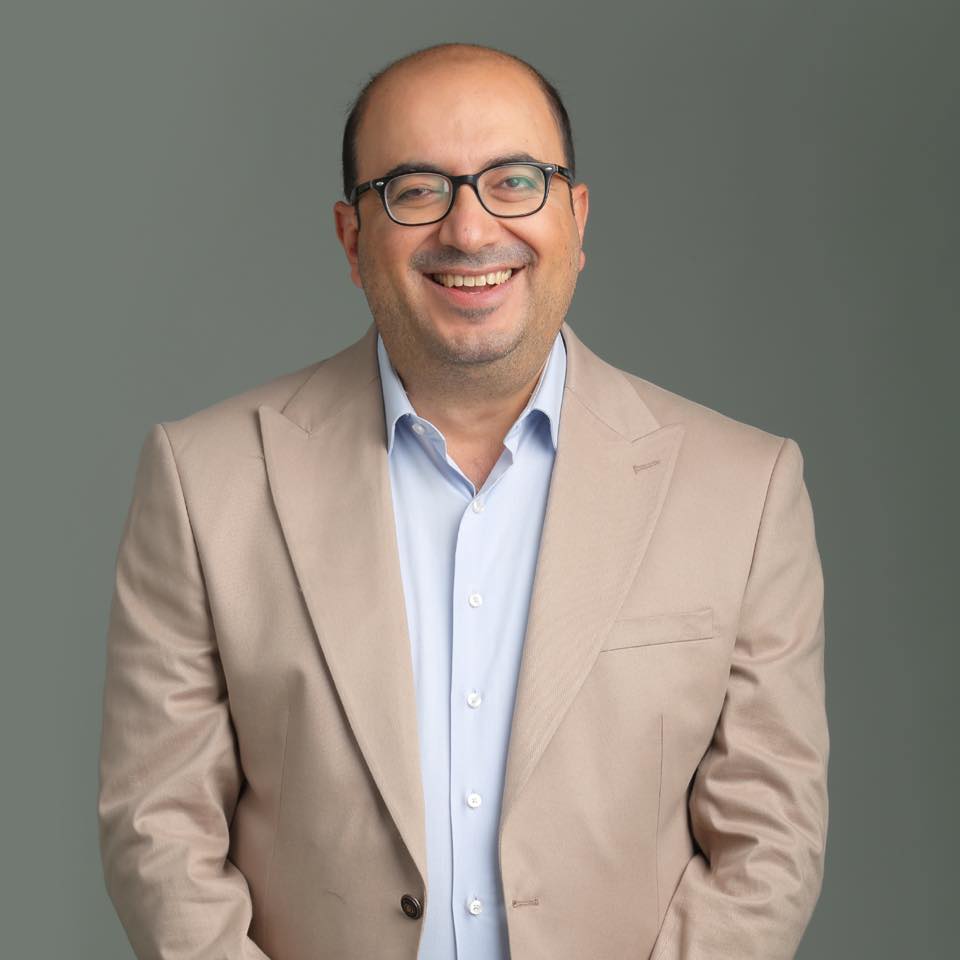
Sami Abu Shehadeh. Photo: Doha Forum.
Attorney General Gali Baharav-Miara is well aware of this history. In her response to a petition filed with the Central Elections Committee by the Kahanist Jewish Power party seeking to disqualify Balad chairman Dr. Sami Abu Shehadeh – who is running this time on a joint list with the Ta’al and Hadash parties – she devoted most of the response to reviewing previous Supreme Court decisions.
She noted that the evidence submitted by Jewish Power did not meet the requirements of the law or the threshold conditions established in Supreme Court rulings, with one exception: an article published by Abu Shehadeh on October 8, 2023, the day after the Hamas massacre and hostage-taking. She rejected his explanations, repeatedly expressed shock at the article and concluded that it constituted an unequivocal expression of support for the armed struggle against the State of Israel.
In his response to the disqualification petition, Abu Shehadeh argued that the content and intentions of the article had been misinterpreted. But he also wrote: “I acknowledge that, in retrospect, the lack of any reference to the crimes of the October 7 attack in my article is glaring and mistaken.” Moreover, he did not wait until election day to clarify his position. After the war began, he spoke out in articles, on social media and in interviews against the acts and crimes committed by Hamas against Israel’s civilian population. He said that such acts could not be accepted in any human society, that the Hamas attack was directed against everyone living in the area, and that members of his Jewish friends’ families had been murdered in the massacre. Throughout his political career, he has supported a political settlement and opposed violence and armed struggle.
Yet given the Supreme Court’s clear jurisprudence, the article and the dispute over its interpretation should not have changed anything. Baharav-Miara is aware of this and wrote in paragraph 55 of her response that, as Abu Shehadeh argues: “The evidentiary foundation in his case does not correspond to the full framework that has, as a rule, been recognised in the case law as a sufficient basis for disqualification. The case law has emphasised the obligation to show that there is a critical mass of clear and unequivocal evidence, from which a dominant characteristic of the candidate’s activity can be inferred, and that this involves repeated activity... In cases in which candidates were previously disqualified, and their disqualification was upheld by the Supreme Court, there was a very broad and longstanding evidentiary foundation, demonstrating systematic and consistent activity to advance the prohibited objective through dozens of statements and even actions.”
Passing the ball to the Supreme Court
As noted, in Abu Shehadeh’s case, there is at most a single article. By contrast, the “critical mass” of his statements and publications throughout his political career, before and during the war, has reflected a clear position in favour of a political settlement and the advancement of democratic values and human rights, and against violence.
Yet, recklessly, Baharav-Miara chose to pass the ball to the Supreme Court and invite it to consider overturning jurisprudence developed over decades and disqualifying Abu Shehadeh on the basis of a single article, on the grounds that its severity outweighs the absence of additional evidence.
She chose this course despite the fact that, as she noted in paragraph 25 of her response, the Supreme Court had already rejected a similar attempt to disqualify Balad candidate Heba Yazbak in the 23rd Knesset elections, held on March 3, 2020. The majority opinion addressed the evidentiary threshold required, while the minority opinion gave greater weight to the seriousness of the limited evidence presented.
At the same time, Baharav-Miara told the Central Elections Committee that Jewish Power should not be disqualified – the party that leads the Kahanist movement in the Knesset, whose leader, Itamar Ben-Gvir, is subject to international sanctions, has repeatedly incited violence against Palestinian civilians, and has pursued policies amounting to crimes against humanity in prisons and the West Bank.
Her decision is not surprising, given that throughout her tenure, Baharav-Miara has pursued a racist “divide and rule” approach: defending the rule of law and the rights of Jewish citizens while allowing basic freedoms of Arab citizens of Israel to be stripped away wholesale, while at the same time legitimising a policy of crimes against humanity toward Palestinian prisoners and against the entire population in Gaza, the West Bank and Lebanon, and effectively helping implement the entirety of Minister Itamar Ben-Gvir’s agenda.
The Jewish opposition parties – all of which, except the Democrats, have already announced that they will not form a government with Arab parties – on September 23 supported Abu Shehadeh’s disqualification during a hearing before the Central Elections Committee. The Supreme Court will now be required to uphold or reject the disqualification. Thirty-one committee members voted in favour of disqualifying him, while only four voted against.
A planned move?
Yair Golan, chairman of the Democrats, explained: “There are no concessions for Abu Shehadeh and no concessions for Ben-Gvir – both must be disqualified.” It is a cynical and ugly statement, as though there were any similarity between the two men, their actions or their statements. Supreme Court Justice Noam Sohlberg said during the hearing that “a single extraordinary statement is not enough to disqualify” a candidate, yet he too voted in favour of the disqualification.
The support of all the Jewish opposition parties for the disqualification of the Balad chairman and one of the leaders of the joint list further diminishes the already slim possibility of Jewish-Arab political partnership in the Knesset. If the Supreme Court also upholds the disqualification, Arab minority participation in the elections is likely to suffer further, at a time when the community is already deeply disillusioned and facing rampant racism, violence and incitement. On September 21, Kan News reported that only 50 percent of respondents in Arab society planned to go to the polls.
Until now, the suppression of voting among Arab citizens appeared to be an interest and initiative of Netanyahu. But in light of the opposition bloc’s decline in the polls, it is now clear that the Jewish parties in the bloc would benefit from a reduction in the number of seats held by Arab parties, bringing them closer to the 61 seats needed to form a Knesset majority without Arab parties, or at least ensuring that they have more seats than Netanyahu’s bloc. Even if this is not a planned move by the Jewish opposition parties, it is nevertheless racist, anti-democratic and contributes to the entrenchment of Kahanism in Israel.
Beyond that, the move amounts to political suicide for the Jewish opposition parties themselves: If the Supreme Court establishes a precedent lowering the evidentiary threshold for disqualification so that a single statement by a candidate is sufficient if it is deemed serious enough, those parties and their candidates could also face disqualification in future elections. Netanyahu will not stop at disqualifying Arab parties in order to remain in power.
The disqualification of Sami Abu Shehadeh shows that all the Jewish opposition parties fall somewhere on the Kahanist spectrum and cannot be trusted. Israel’s Arab minority needs international protections, as do Palestinians in the West Bank and Gaza.
Eitay Mack is an Israeli lawyer and human rights activist.
The Wire is now on WhatsApp. Follow our channel for sharp analysis and opinions on the latest developments.


