

Good Intentions and Exotic Pets – Never a Good Mix


Bengaluru: Pet keeping for companionship is a hallmark of modern human societies and has increased alongside urbanisation. In recent decades, there has also been a noticeable rise in the keeping of exotic pets in cities around the world, including, more recently, in India. Although keeping exotic animals may appear to be a more glamorous extension of keeping dogs and cats, the implications are far more complex – for both humans and animals. It is therefore essential not only to understand the impacts of the exotic pet trade but also to examine the underlying drivers of this demand, and to develop effective ways to manage it.
Conservation and welfare concerns
Conservationists and animal welfare groups have long raised concerns about the exotic pet trade. Numerous cases of laundering wild-caught animals into the captive-bred trade have revealed its significant contribution to the decline of wild populations. Research shows that for every wild animal that reaches a pet owner, many more die during capture, transport, or storage – mortality rates can reach as high as 75%. Even animals bred in captivity, whether legally or illegally, are often transported over long distances in inhumane conditions, resulting in deaths from suffocation, injury, or starvation. Those that survive frequently suffer in warehouses and pet shops, handled by inexperienced or inconsiderate caretakers.
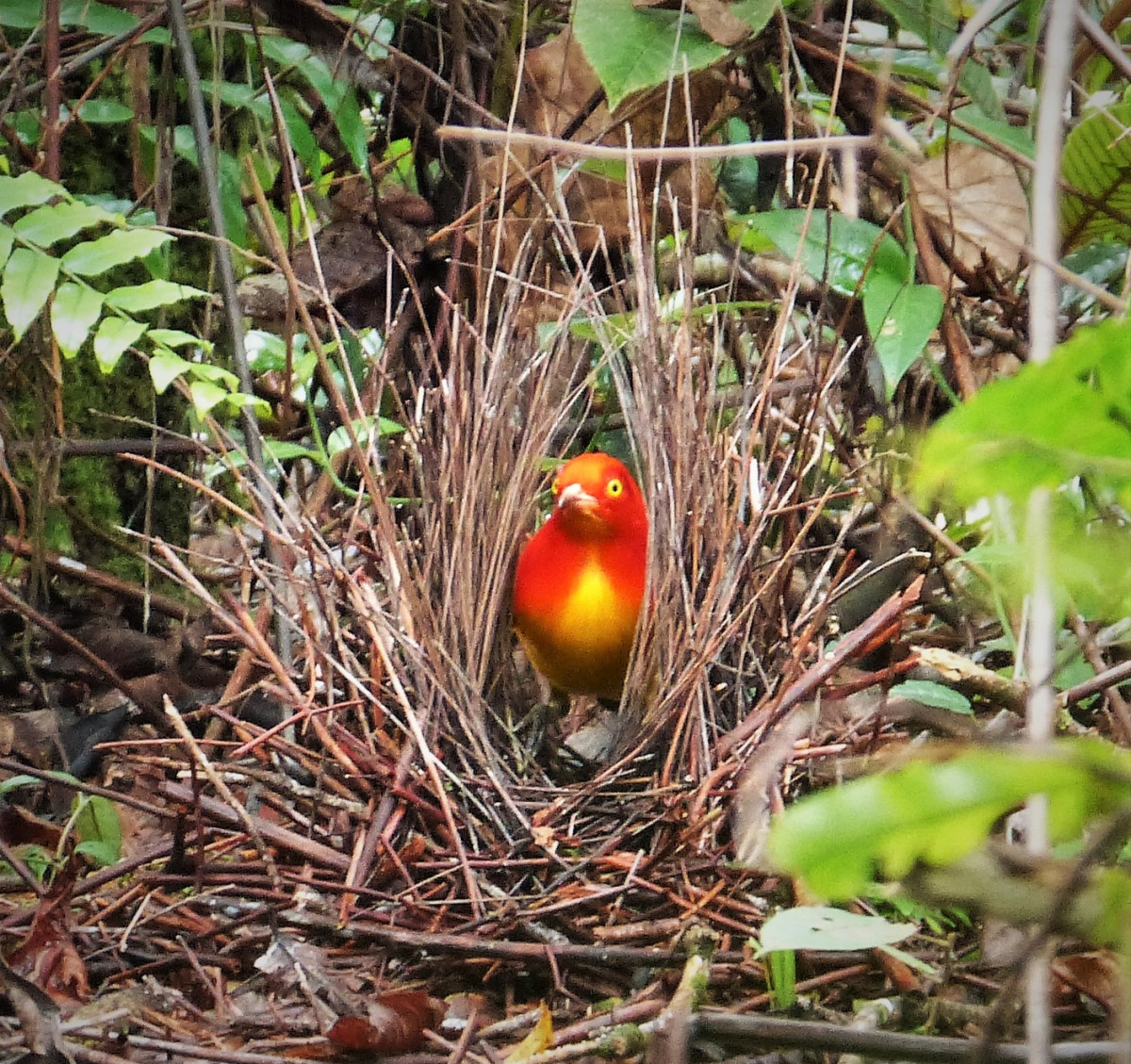
Flame Bowerbird in the wild. Photo: gailhampshire from Cradley, Malvern, U.K, CC BY 2.0 via Wikimedia Commons
The trade also poses risks to people, including the transmission of zoonotic diseases – several cases of exotic pets infecting their owners have been documented. Beyond human health, the trade fuels ecological problems such as the spread of invasive species that threaten local biodiversity. For instance, few buyers who purchase red-eared slider turtles for a few hundred rupees realise that this species is listed among the world’s 100 worst invasive species.
Despite these concerns, demand continues growing, particularly among younger demographics in developed and developing nations, and with greater purchasing power in younger individuals, this fuels the problem. Globally, researchers are now beginning to explore the motivations behind these human actions to provide insight into better messaging strategies.
Exotic pet owners – One size fits all?
Emotion is one of the most important factors influencing the decision to acquire exotic pets. Studies reveal that prospective owners seek emotional gratification/connections and companionship from exotic animals, quite similar to motivations for traditional pet ownership, albeit with some distinctive characteristics.
Through the lens of emotional attachment, the motivations of those wanting to own exotic pets can be categorised into three types according to recent research: 1) rational owners who prioritise practical considerations, 2) convenience owners who value ease of care, and 3) emotional bond owners who seek deep relationships with their animals. Those endorsing emotional bonds demonstrate the strongest attachment to their pets and also report the highest satisfaction from pets. These motivations extend beyond just a simple companionship, to include desire for nurturing and caregiving. On the face of it the third type is most well meaning, yet causes the same level of harm as the others. It is clear that a very different kind of messaging would be required for each group.
Self-expression and identity as drivers of exotic petkeeping
A distinctive feature of exotic pet motivation is the appeal of owning something rare, unusual, or unconventional. Aesthetic qualities of exotic species – colours, body shape, or behavioural displays not found in domestic animals. Others value the intellectual challenge of learning about and caring for species with specialised requirements. This ‘expertise’ dimension of exotic pet keeping motivates those who view their involvement as contributing to personal knowledge and expertise development.
Research also indicates that many exotic pet owners are motivated by a desire to be different from mainstream pet keepers. Demographic patterns of exotic pet ownership support this ‘novelty-seeking’ interpretation, with younger individuals showing significantly higher interest in exotic pets compared to older age groups. Studies suggest that teenagers are twice as likely as the general population to express interest in exotic pet ownership, suggesting that developmental factors related to identity formation and exploration may contribute to exotic pet appeal.
Social media – Navigating increasing information and access
Social networks play a crucial role in shaping exotic pet ownership decisions. Exotic pet owners receive and/or seek support from their friends and family, while non-owners may be socially clustered with others who oppose exotic pets. This underscores the idea of exotic pet ownership as being associated with distinct social networks or subcultures that normalise and encourage unconventional animal keeping. These social networks are often built around or facilitated by exotic pet traders who invest in expanding and maintaining these networks for their financial gains. These are often close-knit communities that resist external messaging and influence.
Social media has been a major driver and facilitator of the exotic pet trade. The study from Japan found 45% of prospective exotic pet buyers cited social media as a key influence on their interest. India too has its share of influencers and traders who regularly post videos promoting exotic pets from spiders to primates, and such content appears to be increasing in frequency every day. In addition, interactive wildlife experiences, such as petting zoos featuring exotic animals, further normalise close contact with wildlife and may fuel the desire to own such animals.
The purchase of exotic animals is sometimes driven by concern for the welfare of the individual animal on sale. People who feel deep empathy for animals may feel compelled to ‘rescue’ them from the poor conditions of pet markets and provide them with care. While this impulse comes from compassion, it can ultimately cause more harm than good. Each rescued animal is quickly replaced by another, perpetuating the cycle of capture, breeding, and trade; often with little regard for the animals’ welfare.
Influenced by social media and other factors, many individuals purchase exotic pets with little understanding of their proper care. Sellers often provide inadequate or misleading information, leaving new owners unprepared for the challenges of meeting these animals’ complex needs. When owners later realise the difficulties involved, they may experience regret – leading to neglect, poor welfare outcomes, or even the release of animals into the wild, where they can pose serious threats to local biodiversity.
Looking for better outcomes
India has emerged as a major market for the exotic pet trade over the past decade – but we are not alone. The United States, along with several countries in Europe and Asia, have all shared a long history of exotic pet keeping and have been responsible for driving the unsustainable trade of many threatened species. These markets have also contributed to the spread of thousands of invasive alien species that now threaten ecosystems worldwide. We have an opportunity to learn from their experiences and avoid repeating the same mistakes.
In response to such challenges, some countries are adopting stronger regulations. The European Union, for instance, is considering restricting pet keeping to a curated list of species that suffer least in captivity. Similarly, in 2023, Japan banned the import, trade, and release of red-eared slider turtles after recognising the damage they caused to local ecosystems.
As we navigate this issue, it is vital to find conservation-friendly and humane ways to enjoy the companionship of unusual and beautiful animals. Many people already do so by creating small sanctuaries on their balconies or terraces that attract wild birds, squirrels, and insects. Anyone who has built a butterfly garden, nurtured a mix of plants that provide food and nesting sites, or set up the perfect bird bath knows that this effort offers immense intellectual satisfaction, comparable to exotic pet keeping. The companionship and joy of sharing space with wild creatures is even greater when it comes without the guilt of having taken away their freedom.
In loving memory of Jane Goodall.
“The least I can do is speak out for those who cannot speak for themselves.”
Uttara Mendiratta has worked on issues of wildlife hunting and trade for over two decades, combining research and practice, and is currently pursuing a PhD on prevention models. Madhavi Rangaswamy is a professor and researcher in the field of Human behaviour and cognitive neuroscience and she teaches at Christ University.
This article went live on October seventeenth, two thousand twenty five, at twenty-one minutes past four in the afternoon.The Wire is now on WhatsApp. Follow our channel for sharp analysis and opinions on the latest developments.


