

Power and Politics Are Now the Death and Life of Bengali Cinema


Kolkata: On November 3 this year, the trailer of an independent Bengali film called The Academy of Fine Arts was doing the rounds on social media, setting the hype-train abuzz for its heady, Tarantino-esque feel and the promise of something unique. On November 13, a day before the release, it was reported that the film was stalled. By then, posters had been put up throughout the city, and tickets were listed online. And yet, the film cleared for release by the Central Board of Film Certification, could not make it to the screens on the designated date.
Why?
The Federation of Cine Technicians & Workers of Eastern India (FCTWEI) had reportedly objected to the film’s release because federation-approved technicians had not been hired for it. Turns out that the makers were all film students, who obviously could not afford a big team. The stand-off continued for a few days, but eventually a compromise was found and the film finally released on November 21 to good reviews, and is running successfully in Kolkata.
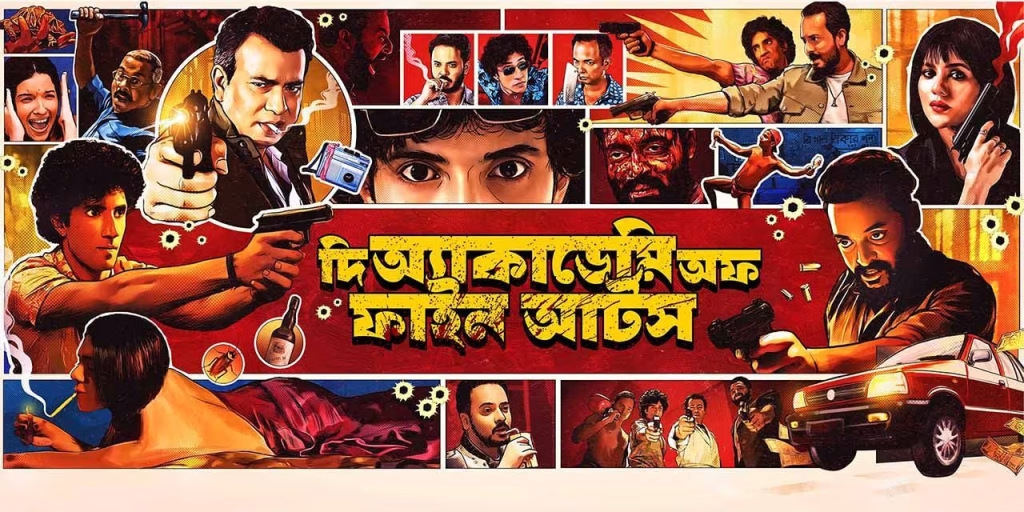
The poster for The Academy of Fine Arts.
The incident ripped open an old can of worms. FCTWEI and its burgeoning influence have long been a topic of fierce debate in the Bengali film industry. Among the several rules that it imposes is that a filmmaker must hire a given number of federation-approved technicians for their project, regardless of the film’s requirements. “You must hire the mandated minimum, even if you don’t need that many people,” says filmmaker Indranil Roychowdhury, “This puts undue pressure on resources. On average, a Bengali film has to complete shooting in 12-14 days. Both quality and quantity suffer as a result.”
While Bengali films have lately struggled to find audiences due to several reasons, the number of theatrical releases has dwindled. The Print mentioned in a 2024 article that while 134 Bengali films were made in 2023, the number had fallen to as low as 37 in 2024.
The industry, once a hotbed of creativity and the home to towering figures like Tapan Sinha, Tarun Majumdar, Ajoy Kar, besides the trinity of Satyajit Ray, Mrinal Sen and Ritwik Ghatak, is on the brink of a systemic collapse.
“It is almost dystopic,” points out Anirban Bhattacharya, a stage and screen actor of repute, “there is not enough work for the sheer volume of the workforce, which includes artists, technicians, and directors”.
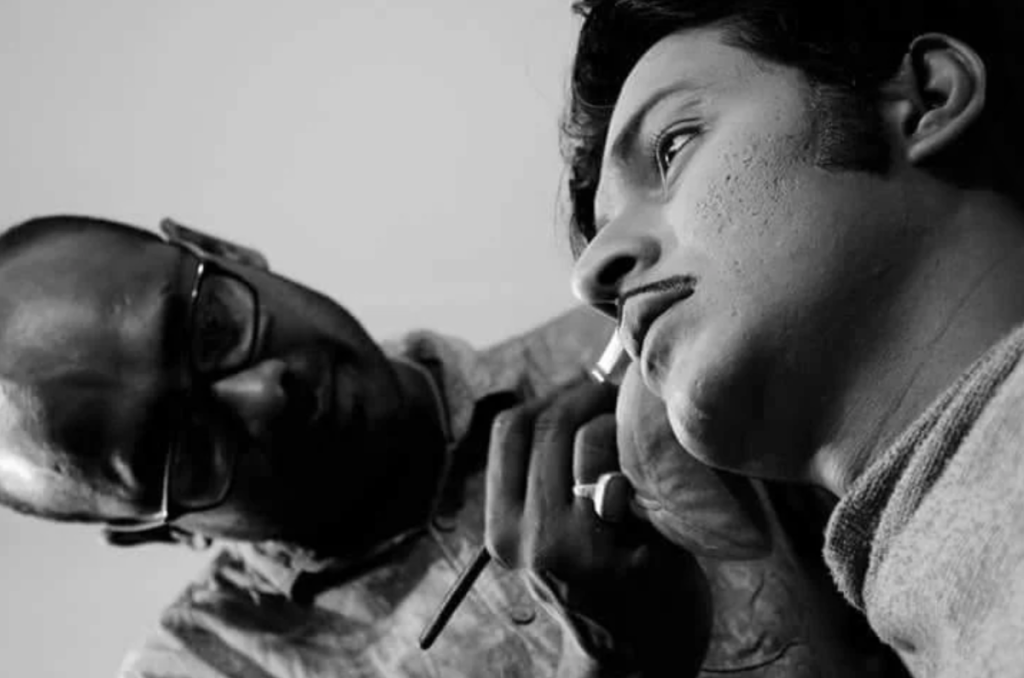
Actor Anirban Bhattacharya. Photo: anirbanactor.com.
Bauddhayan Mukherji, producer-filmmaker and co-founder of Little Lamb Films, echoes his sentiments: “The way things are shaping up, Kolkata is no longer conducive to independent filmmaking….I often find people who have no constructive function on my set. Why should I pay for them? Kolkata is the only city where such strange rules apply," he said.
In the already stressed environment, the federation’s arbitrary rules and control measures have been creating even more friction. Any shooting outside the federation’s ambit is pejoratively called “goopy (secret) shooting", and any technician partaking in such work is suspended for three months. “It is absolutely illegal,” says Anirban Bhattacharya, “The federation has no authority to do this. Whether it is the chief minister or the body of law, several entities have stated on multiple occasions that nobody can stop anyone else from working.”
It all came to a head back in July 2024, when director Rahool Mukherjee faced a three-month suspension by the federation for working on a Bangladeshi OTT series. The federation alleged that he had failed to hire the mandatory minimum number of technicians, and the federation's regulation requiring higher fees for foreign productions was bypassed. Early on, when a few Hollywood productions were shot in the city, the federation had decided that any foreign production in Kolkata had to shell out four times the usual pay. While this may have been conceived with Hollywood in mind, it rendered the Bangladeshi project unfeasible. The series had to be shelved. This galvanised many filmmakers to protest and call for a strike. They demanded a resolution to the issue, a way for them to work without a sword hanging over their heads. “How can you stop an artist from working?” was the general refrain.
The directors resumed work after an intervention by the chief minister Mamata Banerjee, and her promise of setting up a committee to streamline processes and regulations. But when nothing seemed to move after months of waiting, 14 filmmakers, including leading names like Indranil Roychowdhury, Parambrata Chatterjee, and Anirban Bhattacharya, filed a petition before the Calcutta high court. The plea claimed that the federation’s actions have impacted their constitutional right to work. The high court dismissed the writ petition, noting that the petitioners’ claims were disputed by the respondents, which makes it unsuitable for writ jurisdiction. It further noted that the government wants to “wash its hands off” the issue, and denies any responsibility to ensure the smooth functioning of the industry.
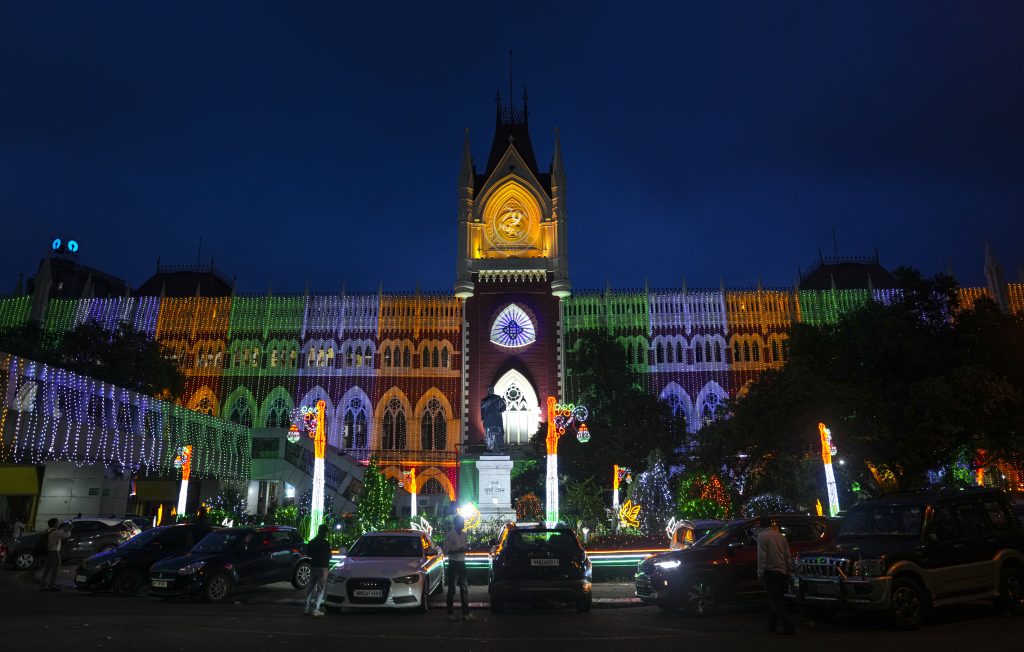
The Calcutta high court complex is illuminated in the Indian tricolour on the eve of Independence Day. Photo: PTI/Swapan Mahapatra.
Some among those 14 directors later apologised, often via social media posts, expressing regret over their actions. They conceded that it was a mistake to go to court and the only way forward was to resolve things through discussion. Some of them mentioned Swarup Biswas, the president of the FCTWEI, acknowledging his role and swearing their allegiance to him. In October 2024, journalist Madhurima Dutta wrote a series of investigative pieces on the portal inscript.me, noting that Biswas was at the centre of the coercive environment in the Bengali film industry. Biswas happens to be the younger brother of West Bengal power minister Arup Biswas. The two are veteran leaders of the ruling Trinamool Congress. Dutta's articles tell the story of how the Biswas brothers, without any background in films, made their way into the federation and strengthened their hold over the film industry. “At the root of the problem is a highly oppressive system,” says Dutta. “Their opponents cannot speak out against these guys as they are closely associated with the ruling party. Such opponents, often directors, stand to lose a lot if they don’t align with Biswas.”
Those who refuse to bend the knee have to face dire consequences. The star actor-director Bhattacharya, who was an active part of the group who moved court, says he has been unofficially suspended. “There is a silent declaration that I should be kept from working in Bengali movies,” says Anirban. He notes that while one might hear excuses like "he is too expensive" or "he doesn't fit the role," he knows, being an insider himself, that this is a deliberate action. The director Roychowdhury, also a part of the group who spoke out, considers himself banned as well.
On the flip side, there are voices like that of Anirban Maity, who has worked as an editor for more than a decade. While acknowledging that there is very little work going around, Maity adds, “More often than not, people don’t even examine the federation’s rulebook properly. Swarup Biswas is massively popular among the junior technicians because he speaks for them.” Biswas has often stated that the federation exists to fight for the interests of technicians and that his primary goal is their welfare.
“The only way to break this rut is to find your own distribution system,” concludes Roychowdhury.
Pradipta Bhattacharyya, whose film Nadharer Bhela is making waves internationally, believes in doing what he does best: “I have found a way to make films independently, and will continue to do so. I remain hopeful. I feel that out of these tough times, a new generation of filmmakers will find new ways to be creative. Some of the finest work is born in adversity. Look at Iranian cinema.”
Amborish Roychoudhury is a national award-winning writer and film historian.
Udayan Ghosh is a writer, poet and filmmaker who writes in Bengali under the name 'Udayan Ghosh Chowdhury.'
This article went live on December third, two thousand twenty five, at twenty-five minutes past twelve at noon.The Wire is now on WhatsApp. Follow our channel for sharp analysis and opinions on the latest developments.


