

As Crimes Against Women Rise, Delhi's Women's Commission Stays Closed


New Delhi: Where once women stood in queues or waited patiently to seek help, seated on trademark yellow-and-black chairs along a well-lit corridor, dust now gathers. The offices of the Delhi Commission for Women (DCW), in Vikas Bhawan at Indraprastha Estate, a.k.a. ITO, in the national capital, bear a deserted look.
It didn't happen overnight. As recently reported, the commission first lost a chairperson in January 2024 – Swati Maliwal quit the top position when she was nominated to Rajya Sabha – and then it lost 223 contractual employees in May 2024, allegedly because they were improperly appointed and the Department of Women and Child Development removed them.
Eighteen months after all the staff were made to leave and 23 months after Maliwal quit, The Wire visited the commission – the second-floor premises at ITO, still listed as the official address on its website. A sign greeted all visitors: "Delhi Commission for Women's Office is Closed."
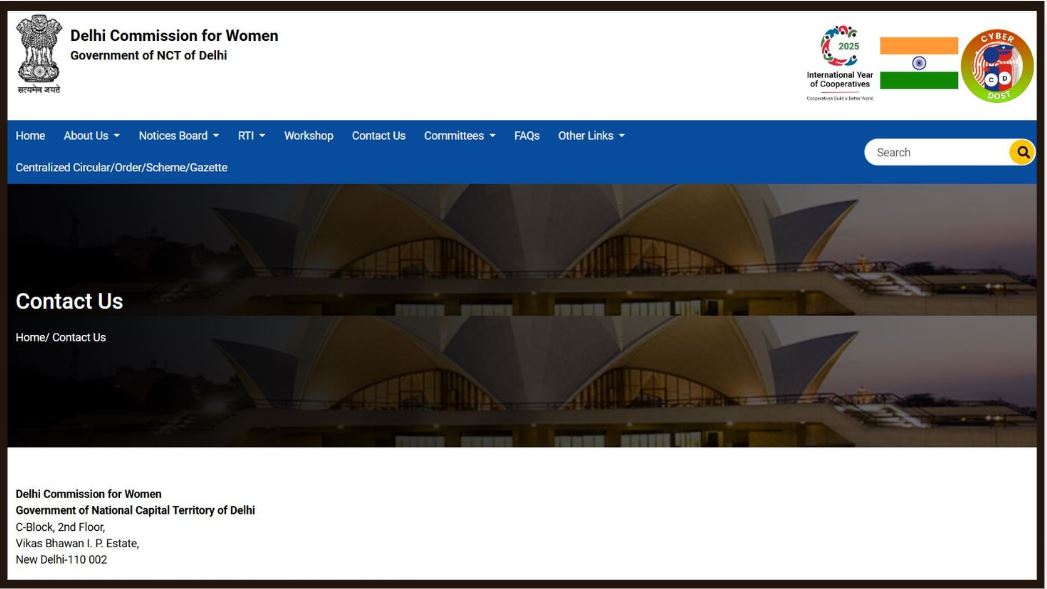
DCW's website: of no fixed address? Photo: Sonia Yadav/The Wire Hindi.
That statement is technically correct, for the office is indeed locked, but what it does not make clear is that the commission itself is no longer a working, functioning body. An institution established in 1994 by the Delhi government to investigate all matters related to the protections guaranteed to women under the law and constitution does not have a Chairperson, Member, Secretary or others; all posts have fallen vacant.
All those women – the lakhs of cases of domestic violence, rape and trafficking that flocked to the commission until last summer – have nowhere to go. This was an observation of the Supreme Court of India during a hearing this very month, where it asked: Where will women turn in times of crisis?
In May, Delhi Chief Minister Rekha Gupta, who has been in the office since February, promised to reactivate the DCW soon. But eight months later, the Bharatiya Janata Party (BJP) city government seems to have put the matter on hold.
One of the DCW's primary roles is to provide immediate assistance to women in distress, for which it had a dedicated helpline number, 181. This service was integrated with the Delhi government's Women and Child Development Department, and calling this number does not seem to provide quick aid.
When The Wire called this number, the person who answered did not know where the DCW's office was located or what its opening and closing times were.
A former member of the commission, speaking on condition of anonymity, told The Wire that the DCW once received lakhs of calls on the 181 helpline, and thousands of cases were registered annually, many related to domestic violence, rape and other forms of exploitation that required quick intervention on behalf of complainants.
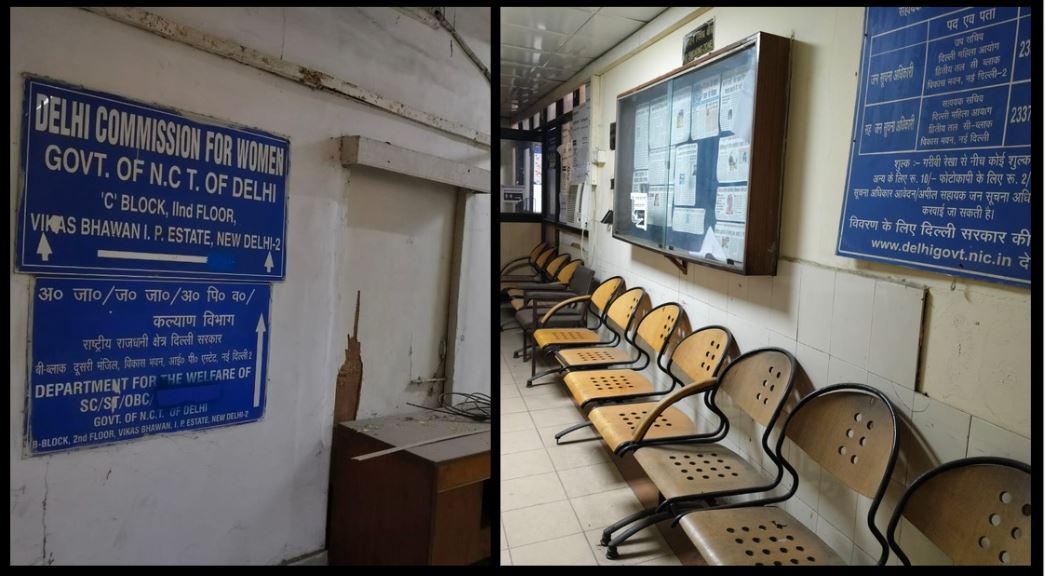
Empty chairs in a DCW hallway, where women could once seek legal and emergency aid. Photo: Sonia Yadav/The Wire Hindi.
The former member said the commission's field staff worked day and night – "24/7" – to address those issues, for women as well as transgender individuals. The commission would summon individuals or organisations based on complaints, have FIRs registered at police stations and issue notices to ensure prompt action was taken. Women were counselled and provided legal aid too.
But the government that came to power on promises of justice for women and made tall claims about how it would help city women, and where the chief minister herself is in charge of women and child development, has not set the ball rolling for a functioning commission.
The former member said, "Now that the commission itself has closed, where can women go in their hour of need?"
Delhi is among the worst places in the country for violence and crimes against women, the former member reminded:
"In such a situation, the closure of this commission is like closing the path to justice for women, because women hesitate to approach the police and courts without assistance. Their cases remain pending for years, exposing them to further harassment. In such a situation, the women's commission was a support system for them, which has now been taken away."
Recent National Crime Records Bureau data shows nearly 4.5 lakh crimes against women were registered in 2023, making Delhi the most unsafe metropolis for women for the third consecutive year. There were 1,088 cases of rape registered in Delhi, the highest among 19 metropolises. Delhi also recorded the highest number of dowry deaths at 114.
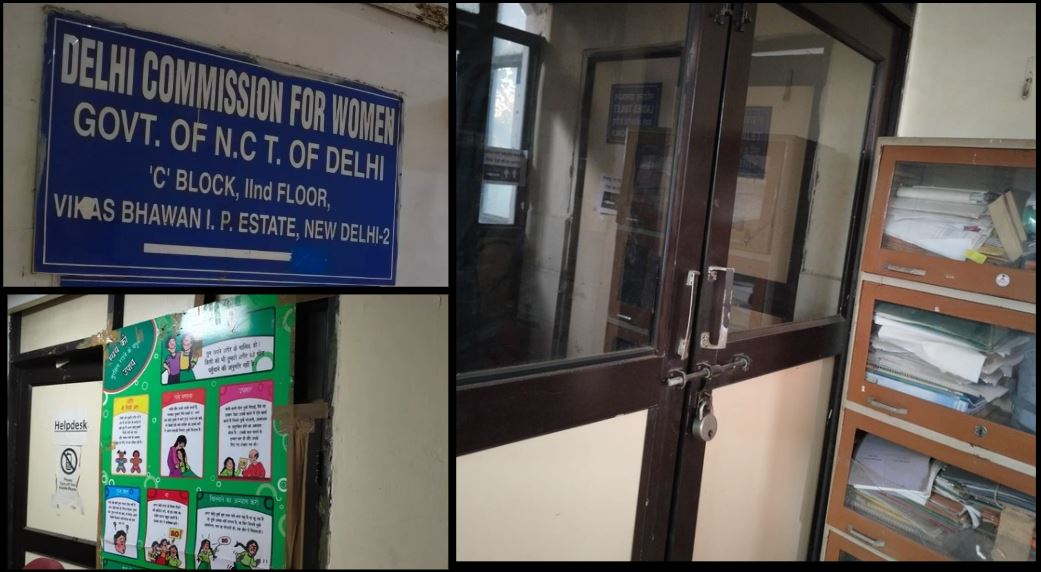
DCW office premises in Delhi: no door left unlocked. Photo: Sonia Yadav/The Wire Hindi.
In 2023, the capital reported 3,952 cases of kidnapping of women, the second highest in the country. Delhi also witnessed the highest number of acid attacks, with six such incidents reported that year.
Delhi also recorded the highest number of cases of cruelty by husbands at 4,219, and the number of cases registered for assaults intended to outrage the modesty of women was 1,791. And Delhi reported the highest number of rape cases under the Protection of Children from Sexual Offences (POCSO) at 1,048, which suggests it is equally unsafe for the girl child as for women.
The incidence of crimes against women has not fallen, but the commission that could speak on their behalf has gone silent.
The president of the Congress party’s women's wing, Alka Lamba, says, "On the one hand, crimes against women are rising in Delhi, while on the other, the office of the commission set up to hear their cases is locked. This is a matter of great concern, especially for a capital where a woman is the chief minister. It’s almost ten months since the new government formed, but a women's commission is not on the priority list."
Subhashini Ali, national vice president of the Communist Party of India (Marxist)’s All India Democratic Women's Association a former Member of Parliament, said the inactivity of the DCW is tantamount to denying women justice. “This is anti-woman work, and the BJP is the biggest anti-woman party,” she said.
"The commission was very active during Swati Maliwal's tenure. Women and girls were helped even during the COVID-19 pandemic. Subsequently, several leaders of the Aam Aadmi Party government, including the chief minister and deputy chief minister, were jailed. Perhaps that is why appointments were on hold. But when the new government came to power, the women’s commission was nowhere in its priority list. First, they prevented the people working there from working, and then closed the office without making any alternative arrangements. It is extremely worrying that a commission established for women has been locked in this manner.”
Ali emphasised why the women's commission is crucial in India, saying…
"I was in Parliament when the resolution establishing the National Commission for Women was passed. We made it clear that it should not become a den of political appointees. It was meant to include people associated with the women’s movement, those fighting for women’s rights, or those connected to such work. But this did not happen. Over time, the commission was handed over to women aligned with the parties in power, and this had very negative consequences. It began to operate in a highly biased manner.
"Extreme activism was often seen in cases against the opposition, while inaction prevailed in cases involving those connected to the ruling party. There are many examples: Chinmayanand, Hathras, the female wrestlers and many others. Incidents continue to occur daily in Uttar Pradesh, especially against Dalit and minority women, yet the commission seems completely oblivious."
Ali said having a woman chief minister of Delhi doesn’t make her pro-woman. If a woman is in an anti-woman party, then she’s also anti-woman. And as such, there’s no place left for women to seek justice. Therefore, the chief minister should rise above politics and immediately unlock the commission."
The DCW has made headlines several times before – for political reasons, over appointments, especially the sudden dismissal of employees and so on. However, this is the first time the commission has been in the news for being completely closed to women.
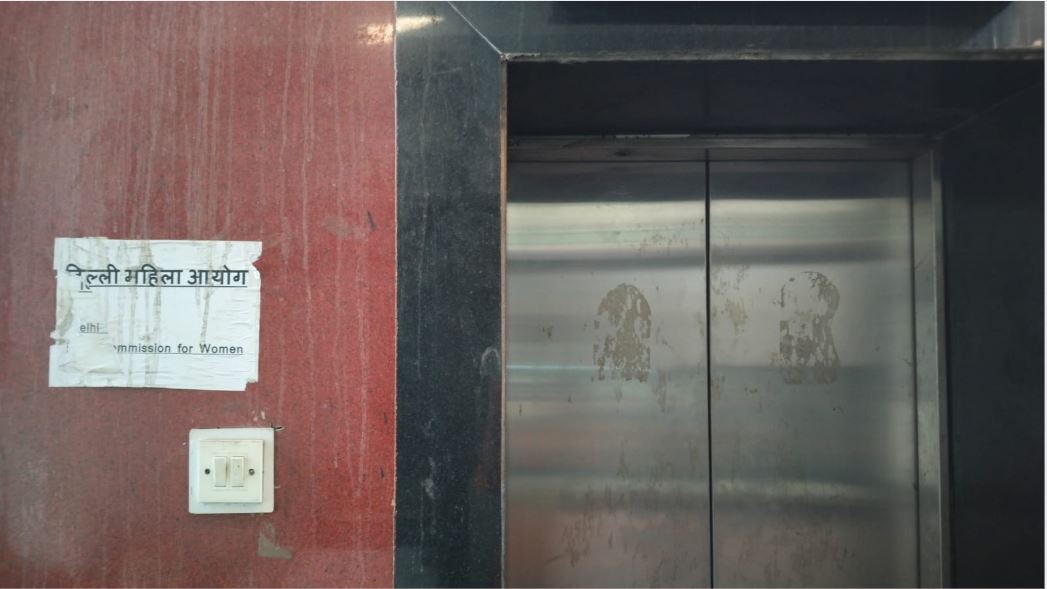
The elevator leading to the once-open DCW office did not work. Photo: Sonia Yadav/The Wire Hindi.
Lamba also said the women’s body should be kept beyond politics – if the chief minister of Delhi is truly sensitive and pro-woman, she should rise above politics and unlock the commission's office with immediate effect.
The matter is extremely serious and worrying, Lamba said, for women come to Delhi to study and work from all over the country – even the world. In such circumstances, the commission is the first resort, a place they could freely discuss their concerns. If it closes, where would they go?
She said, “These days, politics is so dominant that it overshadows women’s issues. In many states, we struggle to get appointments to the women's commission." Whichever state she visits, Lamba said, she first checks whether people had been appointed to positions in these commissions. "If so, is it actively hearing grievances? Is it functioning?" she said.
Lamba questioned the functioning of the National Commission for Women (NCW) as well, saying it had lost its purpose: it operates solely on paper, making political appointments to posts, she alleged.
The NCW was established in January 1992 under the National Commission for Women Act, 1990. It is a statutory body, charged with providing constitutional and legal protections to women, redressing their grievances and making recommendations to the government on all policy matters related to women.
It is currently led by chairperson Vijaya Kishor Rahatkar, who previously headed the Maharashtra Women’s Commission and also the BJP's Mahila Morcha (women's front). She has a nearly three-decade-long association with the BJP, including holding the party's national secretary post and as co-in-charge of its Rajasthan unit.
Rekha Sharma, who previously chaired the NCW, is a Rajya Sabha MP from Haryana and a BJP member too. She is considered close to the Prime Minister. During her tenure as NCW head, she was also embroiled in controversies for her anti-woman remarks.
The Wire attempted to contact the Delhi government’s Department of Women and Child Development and sent questions over email. This story will be updated with a response once it is received.
This report was translated from the Hindi original – first published in The Wire Hindi – by Pragya Singh.
This article went live on December fifth, two thousand twenty five, at zero minutes past eight in the evening.The Wire is now on WhatsApp. Follow our channel for sharp analysis and opinions on the latest developments.


