

Ten Major Indian News Channels Covered Unemployment Only 113 Times Over Five Months


This election, it became clear that unemployment has emerged as a defining electoral issue that will continue to shape the political discourse in the years to come.
Insights from the Centre for the Study of Developing Societies (CSDS)’s work, other research sources as well as media coverage underscore how important it is for the mainstream media to prioritise the issue of employment generation if India is to foster inclusive growth.
At The Wire's request, our lab started filtering unemployment stories, as they represent the unsaid truth about India's underlying distress.
We monitored five English channels (NDTV, CNN News 18, Republic TV, Times Now and India Today) and five Hindi channels (NDTV India, News 18 Hindi, Republic Bharat, Times Now Navbharat and Aaj Tak) between December 16, 2023 to May 21, 2024.
We used keywords like ‘jobs’, ‘unemployment’, ‘बेरोजगारी’ (berozgari, Hindi for unemployment), etc.
And we could only find 113 stories across ten mainstream media channels.
The guiltiest of the pack, with the least coverage, are Republic TV (among English channels) and Times Now Navbharat (among Hindi channels).
In the current context of India's socio-political landscape, unemployment has emerged as a paramount concern that is often ignored by the mainstream media.
India's demographic dividend is characterised by close to half its population being under 25 years of age – this holds immense potential for economic growth. However, the failure to harness this demographic dividend effectively has led to a burgeoning unemployment crisis.
The pandemic-induced economic downturn exacerbated pre-existing vulnerabilities, plunging millions into joblessness and underemployment.
According to the Centre for Monitoring Indian Economy, the unemployment rate in India stood at 8% in 2023, marking a significant increase from previous years.
CSDS surveys conducted in the lead-up to the 2024 elections illuminate the salience of unemployment as a decisive electoral issue. Its research underscores the pervasive anxiety gripping the electorate, transcending regional, linguistic and socio-economic divides.
According to CSDS data, over half of respondents across various demographic categories said it had become harder to get a job, eclipsing the traditional fault lines of caste, religion, and ideology.
Also read | Some Proof Required: Modi Government’s Abysmal Record of No Jobs
Moreover, its research reveals a growing disillusionment with incumbent governments, perceived as ineffectual in addressing the unemployment crisis.
McKinsey Global Institute estimates that India needs to create 90 million non-farm jobs by 2030 to absorb its growing workforce effectively.
According to a study by our lab, 78% of political party manifestos in the 2024 elections included specific proposals to address unemployment. Furthermore, opposition parties capitalise on the discontentment stemming from unemployment to galvanise support against the ruling dispensation.
The resonance of unemployment as an election issue made the INDIA coalition recalibrate their electoral discourse and strategy. Political parties, cognisant of public sentiment, prioritised job reservation in their rhetoric to foreground employment generation initiatives.
Promises of job creation, skill development programs and entrepreneurship schemes feature prominently in their manifestos.
The imperative to tackle unemployment transcends parties, necessitating media attention for putting pressure on both ruling and opposition parties.
Moreover, the imperative to promote labour-intensive sectors and leverage technological innovations for inclusive growth cannot be overstated.
Of all the 113 videos in our dataset, 43 were focussed on unemployment. The remaining 70 had some passing reference to it as part of a larger narrative. The lack of focus on employment reflects the lack of knowledge of the grassroots situation among mainstream TV newsrooms.
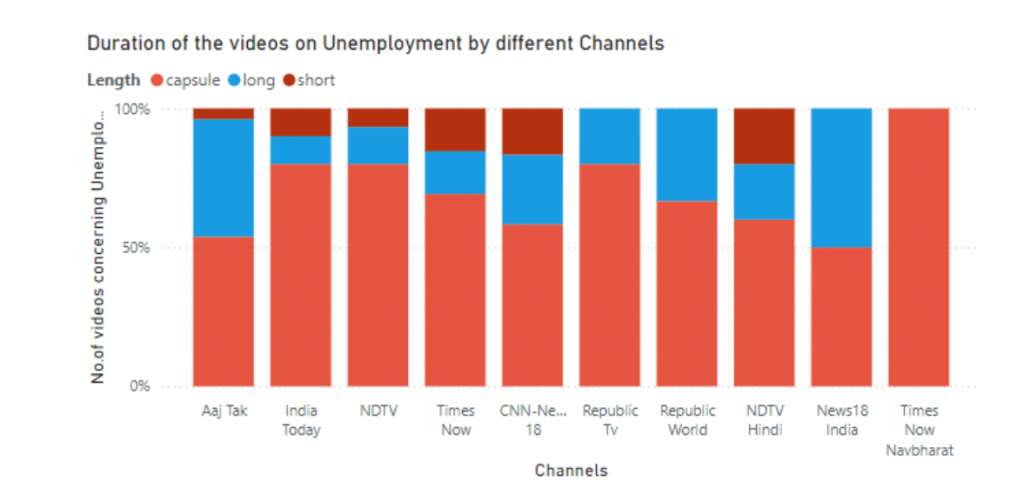
We also examined the videos' lengths and found that 27 were long videos that made some room for a solution-oriented discourse, while 86 were capsules and shorts that superficially covered the issue. Shorts were less than a minute in runtime.
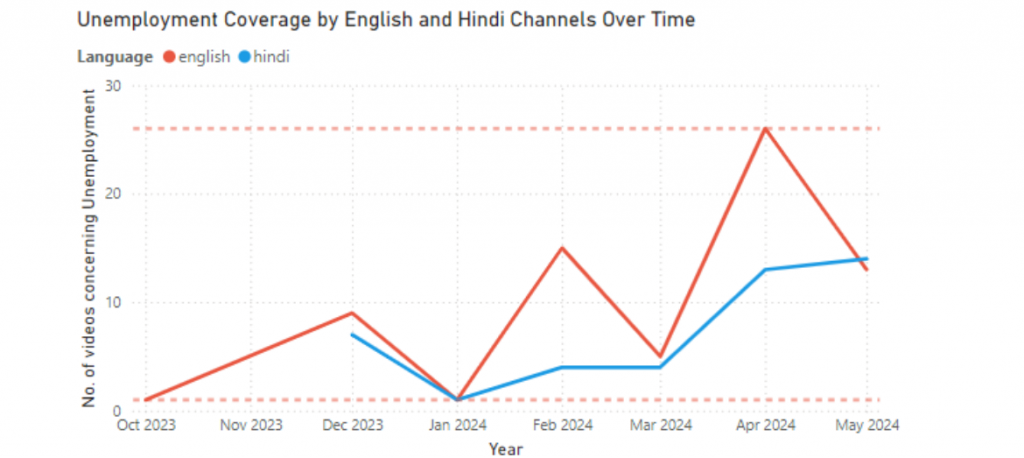
Over time, coverage on unemployment has increased in both English and Hindi channels. We can infer that coverage in the English media is more than in the Hindi media.
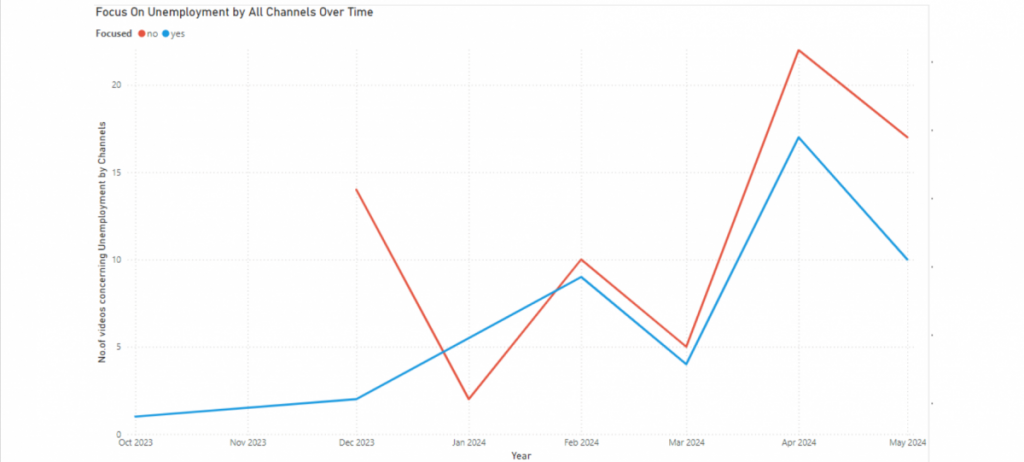
From this graph, we can infer that there has been a increase in non-focused coverage of unemployment over time. After the CSDS report on April 11, there was a spike in the coverage of unemployment.
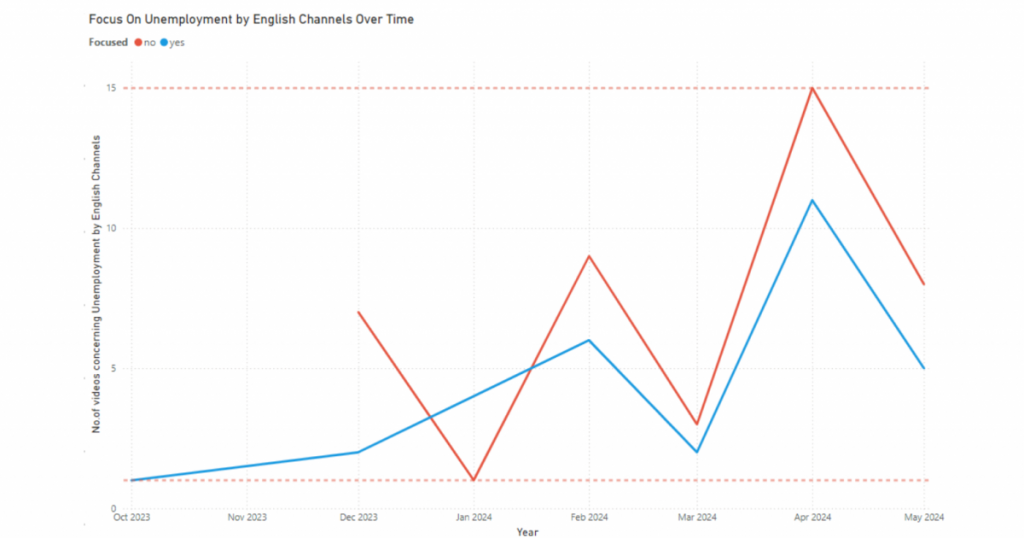
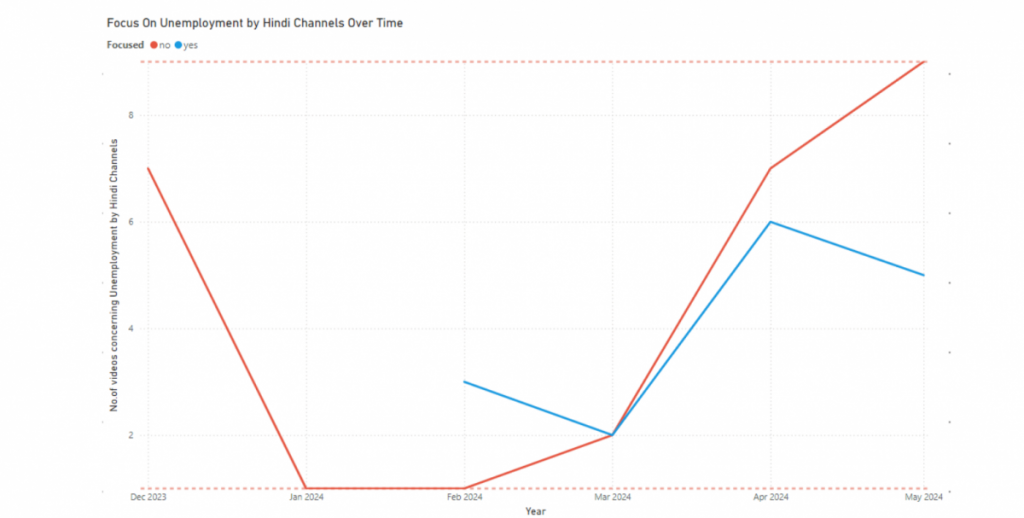
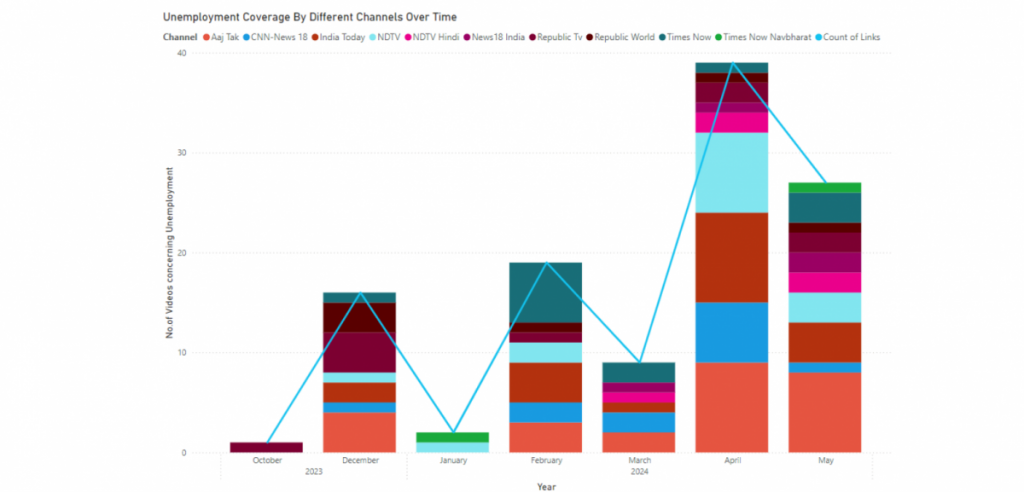
There has been an increase in the coverage of unemployment by channels over time.
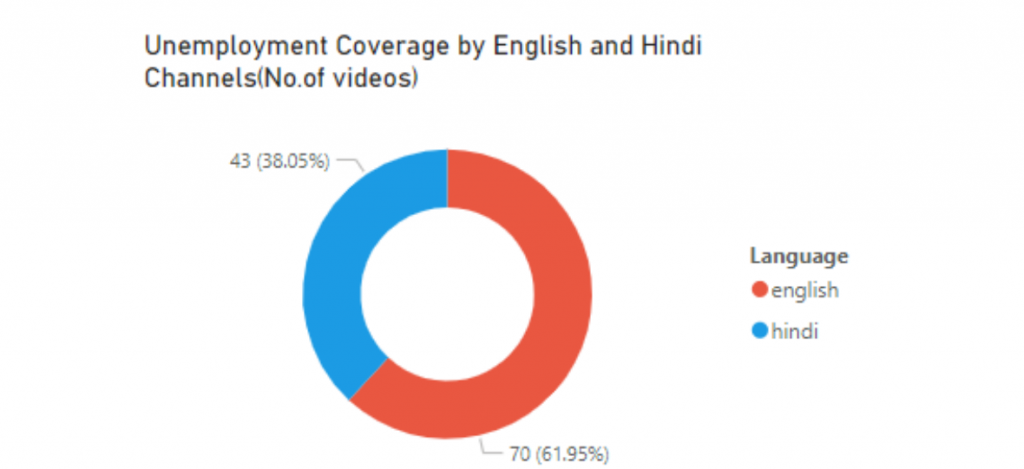
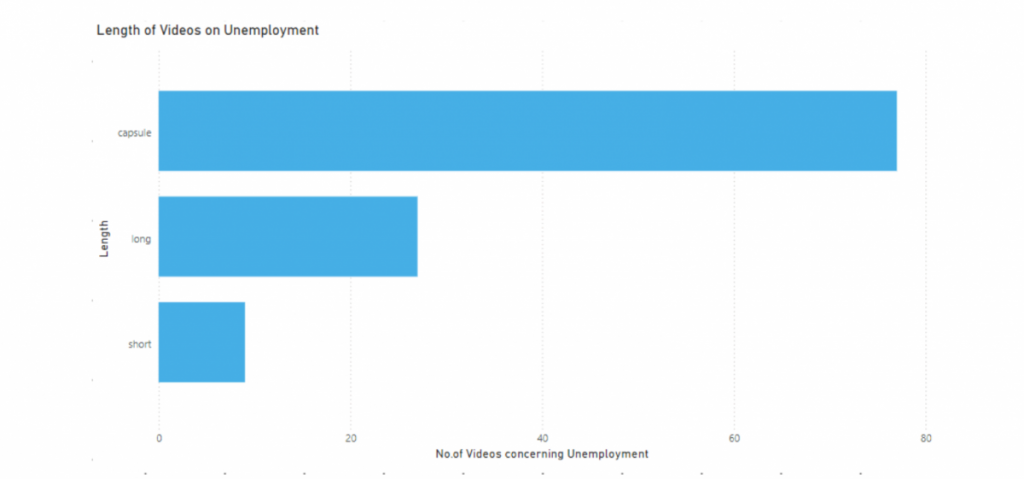
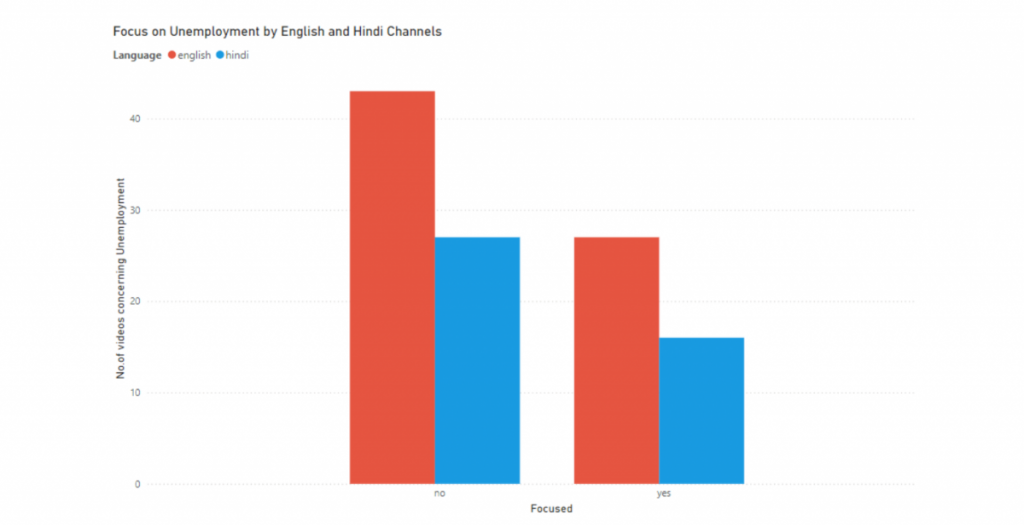
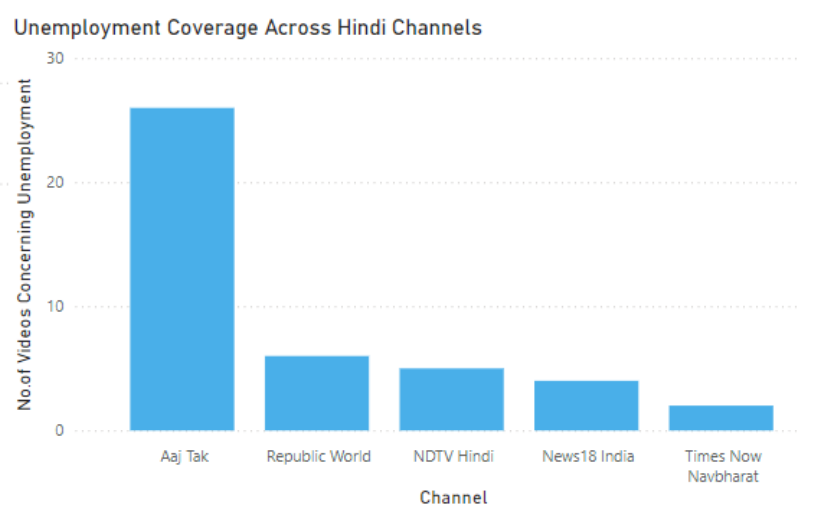
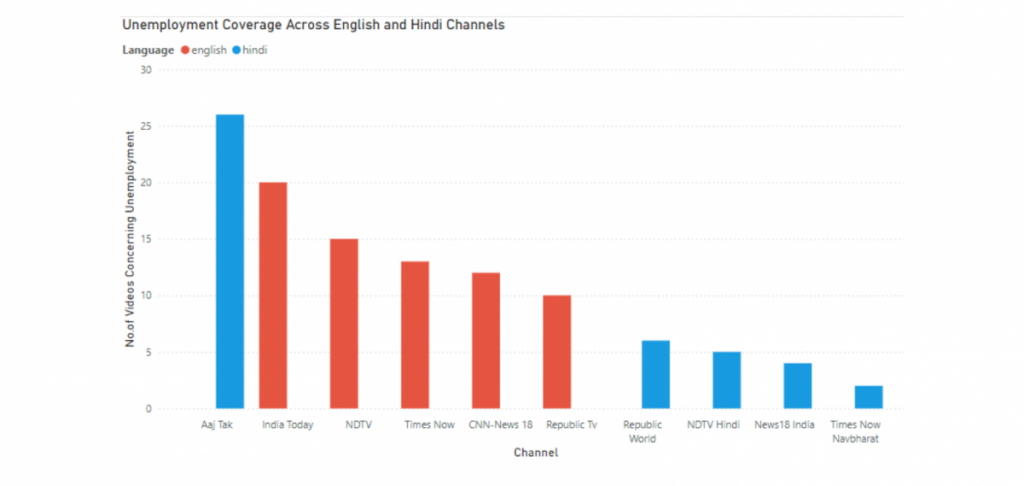
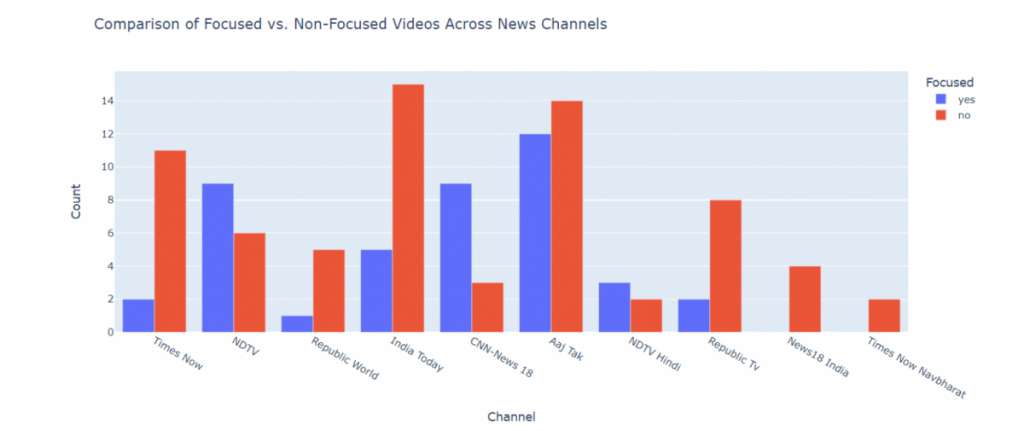
Aaj Tak uploaded the most videos that focused on unemployment, whereas News18 India and Times Now Navbharat never focused on the issue.
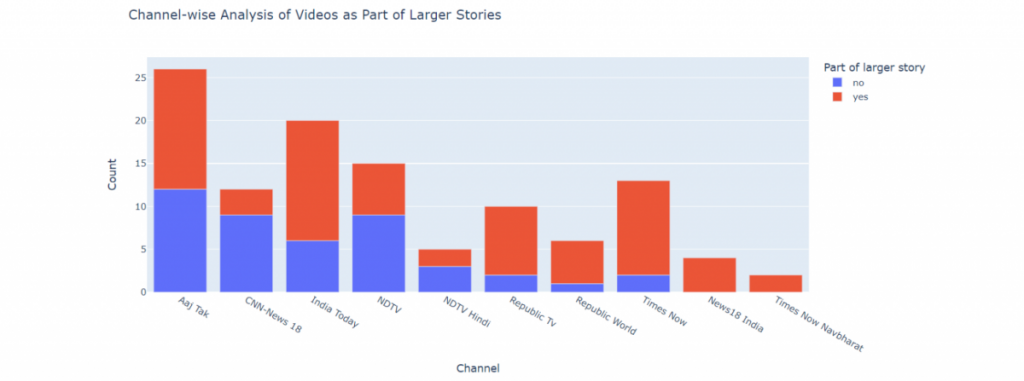
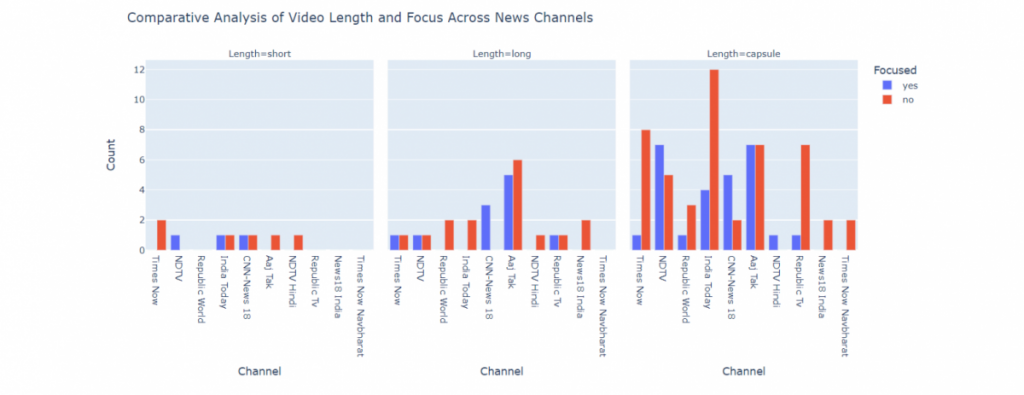
NDTV has the shortest average video length, while Times Now has the longest. This suggests that NDTV tends to cover unemployment through briefer, more focused segments, while Times Now's coverage involves more time and depth. Other channels fall somewhere in between.
The mainstream media's snubbing the employment question is a challenge for our nation's inclusive growth.
Against this backdrop, unemployment assumes significance not merely as an economic metric, but as a determinant of social cohesion and political stability.
The issue of unemployment might end up dictating the national electoral outcome and set the tone for the assembly elections to come.
As the nation stands at the cusp of transformative change, the onus lies on policymakers, political actors and civil society stakeholders to heed the clarion call for a future defined by opportunity, equity and prosperity.
Sundeep Narwani is a co-founder of the Narrative Research Lab.
This article went live on June sixth, two thousand twenty four, at thirty minutes past one in the afternoon.The Wire is now on WhatsApp. Follow our channel for sharp analysis and opinions on the latest developments.


