

Bihar SIR Key Takeaways: ‘Missing Voters’ Triple, Gender Skew Worse, 5 Lakh Voters With Gibberish Values


New Delhi: In his presentation to the Supreme Court on Thursday (October 9), political activist, psephologist and researcher Yogendra Yadav pointed out a wide array of inconsistencies, concerns and misrepresentations in the final voter list released by the Election Commission of India (ECI) after the special intensive revision (SIR) process in Bihar. Yadav is one of the petitioners in the case before the Supreme Court challenging the SIR process.
Here are some of the key points he raised before the court.
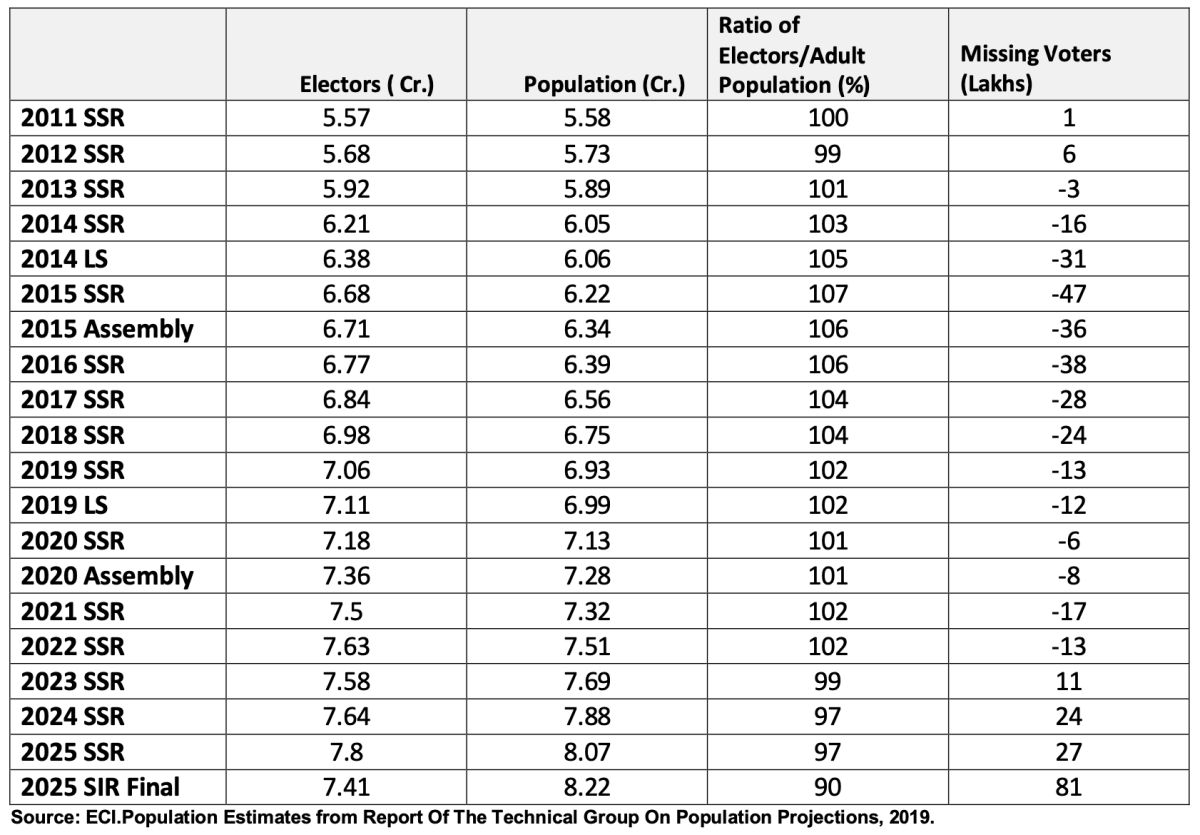
1. Number of ‘missing voters’ has tripled
The proportion of the adult population in Bihar registered as voters has decreased, Yadav and his team of researchers have found. From 27 lakh after the January 2025 special summary revision, the number of adults who are not registered as voters has gone up to 81 lakh in the SIR.
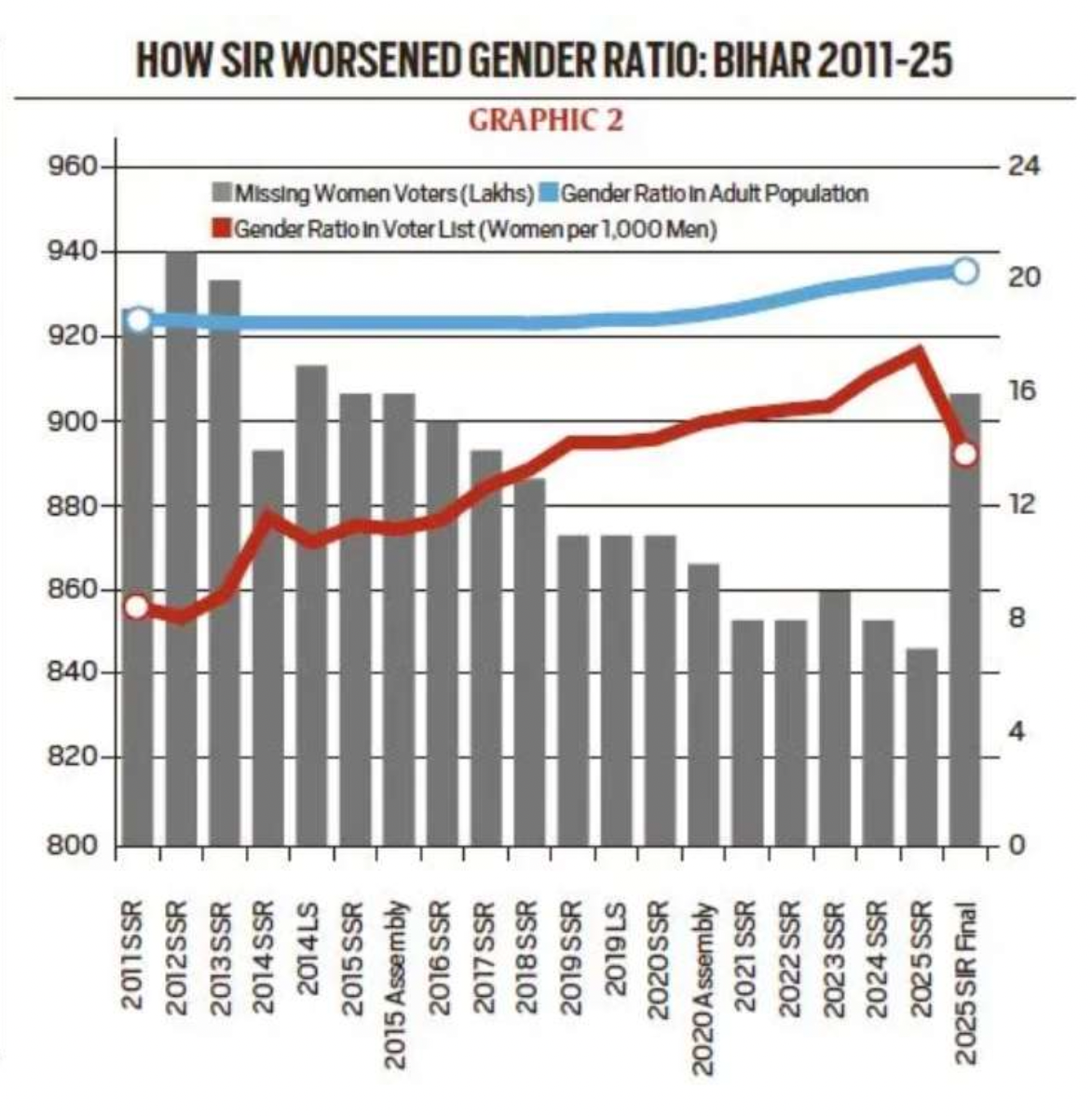
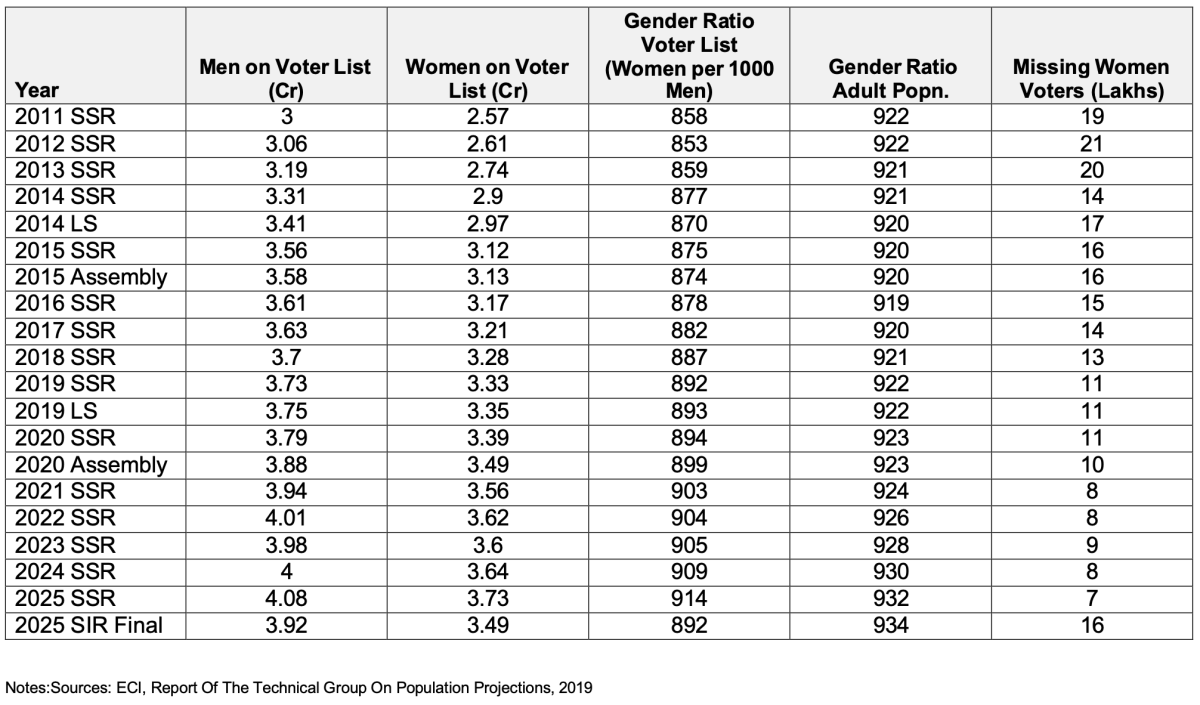
2. Gender ratio of voter list now more skewed
Not only has the number of registered voters gone down and the number of ‘missing voters’ increased, the gender ratio of voters too has suffered. There are more women ‘missing voters’ after the Bihar SIR (16 lakh, as opposed to seven lakh after the January 2025 special summary revision), and the number of women voters per 1,000 male voters has decreased to less than 900 for the first time since 2020.
3. Large-scale inaccuracies
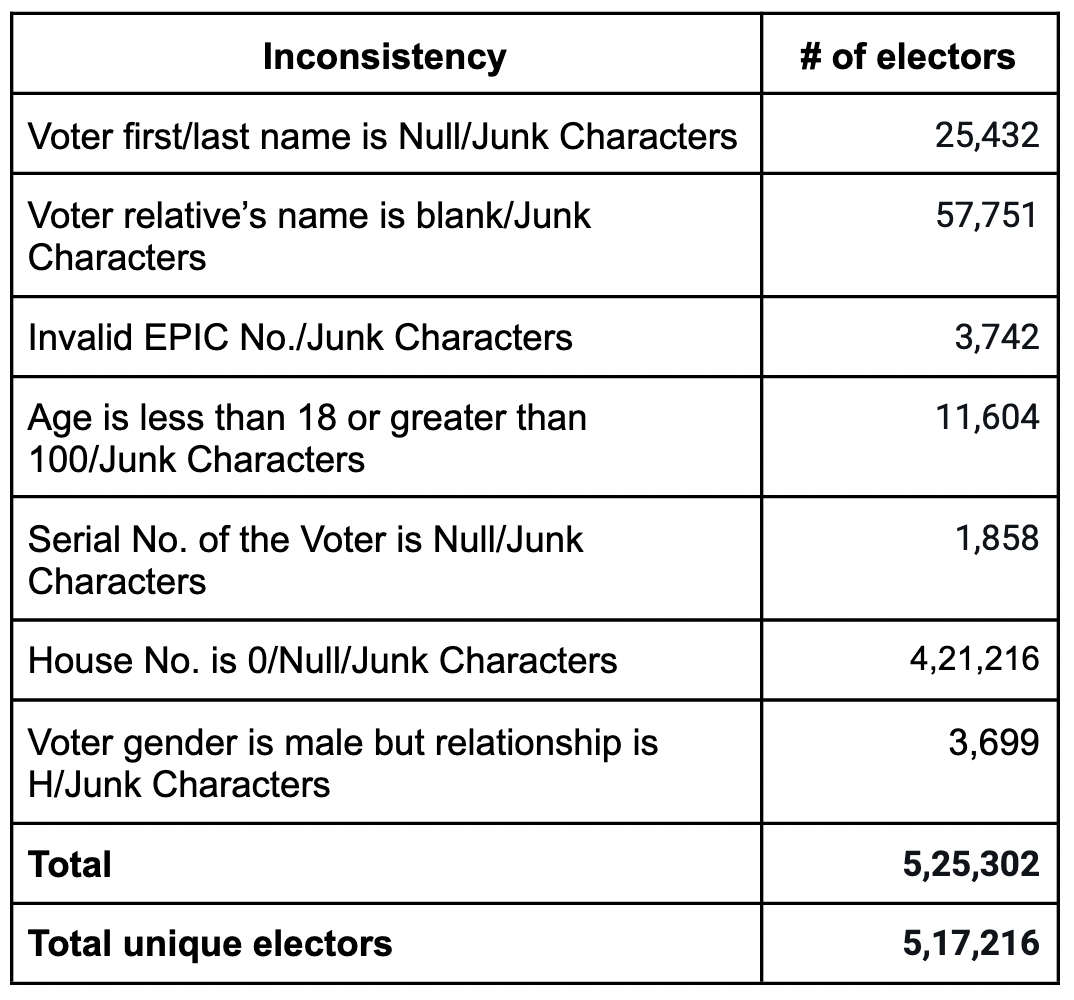
While the ECI has claimed that this exercise was a way to clean up the voter lists, the presentation Yadav made supported what several ground reports have been stating over the last few months – that the Bihar SIR too is riddled with inaccuracies and inconsistencies.
For instance, Yadav said that a whopping 5,17,216 electors had gibberish values in one or more of the entries against their name/voter ID number. He has highlighted the different kinds of inaccuracies that make up this extremely high number – null/junk characters in names, invalid EPIC numbers, age discrepancies and more.
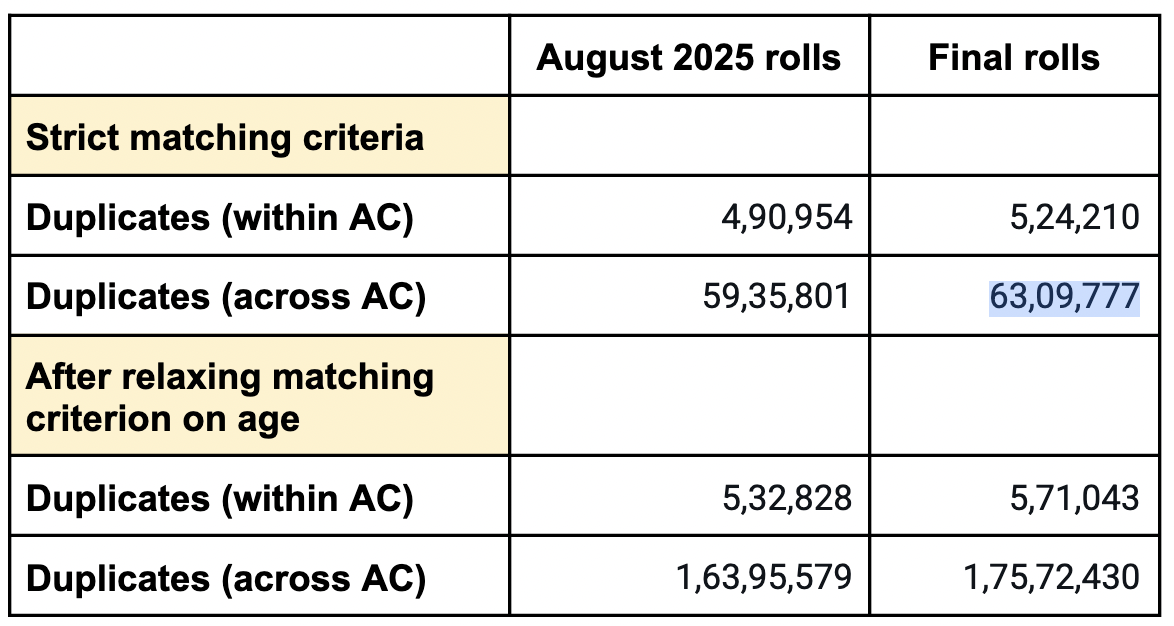
In another surprising revelation, Yadav pointed out that the number of duplicate voters actually seems to have increased after the final SIR list was released – again bringing doubt over why this exercise was conducted in this rushed manner before the polls at all. These include those who have duplicate entries in one assembly constituency, and also those who are duplicated across different assembly constituencies. Using the most strict matching criteria, 5,24,210 duplicates were found within single assembly constituencies, and another 63,09,777 across assembly constituencies.
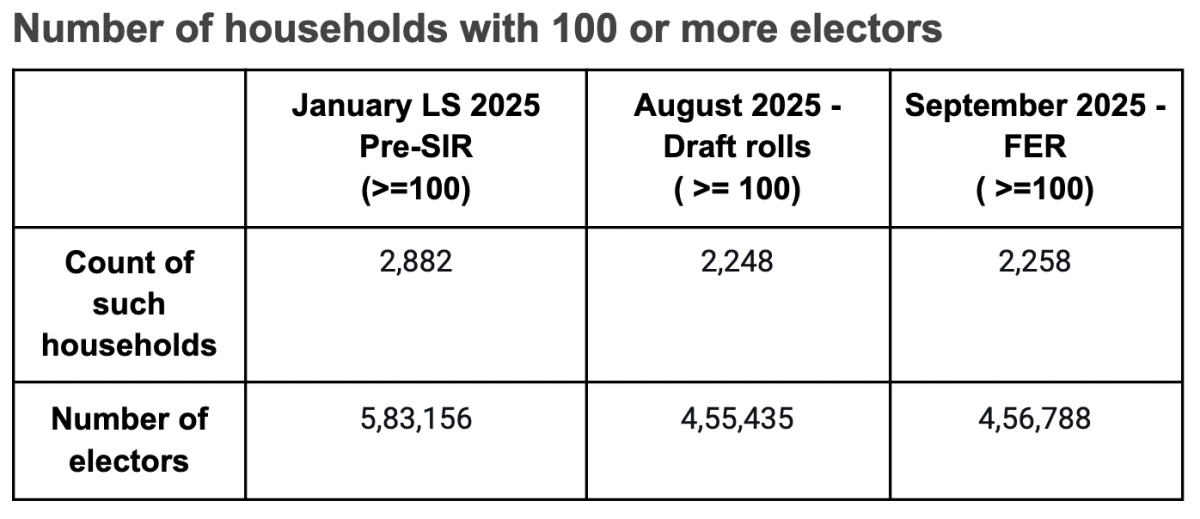
The researchers also found many households housing ‘bulk voters’ – or more voters being registered to one residential address than is plausible. For instance, 2,258 households are listed in the final voter list after the Bihar SIR where more than 100 voters are said to be living. This inconsistency appears to pre-date the SIR, but the SIR – despite the ECI’s claims – has not cleaned up these issues.
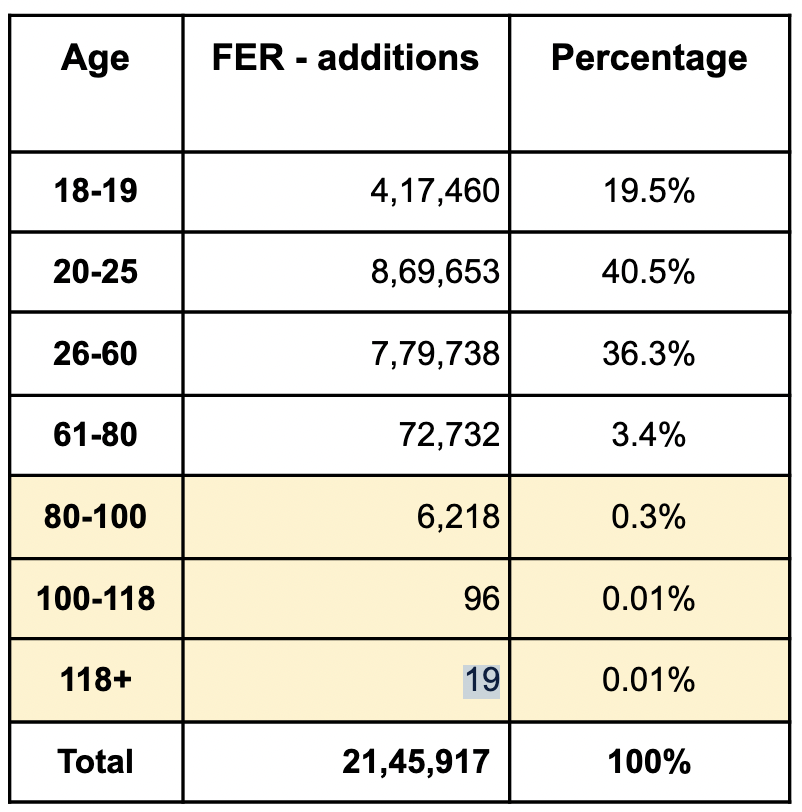
The ages of some of the new voters registered through the Bihar SIR also raises some questions. Yadav’s presentation showed that 6,218 new voters in the 80-100 range, 96 in the 100-118 range and 19 in the 118+ range are now on the voter list.
During the course of the hearings, the Supreme Court had refused to stay the SIR process but insisted that the ECI accept Aadhaar cards as a form of identity proof. Critics, including political parties and activists, had pointed to the exercise’s short time frame and documentary requirements in arguing that there was a risk of disenfranchising a large number of genuine electors. When the final list that was released revealed that the total number of voters had shrunk by about 6%, these concerns were further amplified. On Thursday, the court said that Bihar’s district-level legal services authorities must inform people left off the final electoral rolls produced under the SIR of their right to appeal as well as help them draft and file their appeals
After the final SIR list was released, the ECI announced the schedule for the Bihar polls. Voting will take place in two phases on November 6 and November 11. Votes will be counted on November 14.
This article went live on October tenth, two thousand twenty five, at twelve minutes past four in the afternoon.The Wire is now on WhatsApp. Follow our channel for sharp analysis and opinions on the latest developments.


