

Jordan: King Abdullah Dissolves Parliament, Names Caretaker Prime Minister


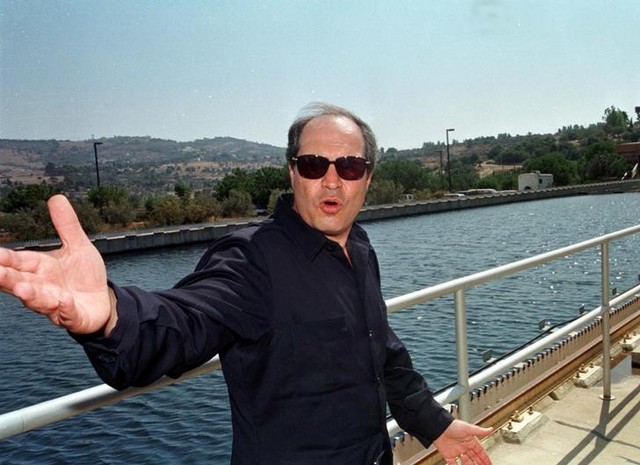
Hani al-Mulqi gestures at Jordan's Zay water treatment plant September 14, 1998. Credit: Reuters/File Photo
Amman: Jordan's King Abdullah appointed veteran politician Hani Mulqi as caretaker prime minister on Sunday after dissolving parliament as its four-year term nears its end, and charged him with organising new elections by October.
The king accepted the resignation of Prime Minister Abdullah Ensour before appointing Mulqi by royal decree. Mulqi has held senior government posts in successive administrations. Under the Constitution, the election must now be held within four months.
"The kingdom faces grave economic difficulties due to the volatile situation in this region, which has had an adverse impact on growth levels," Abdullah said in a letter appointing Mulqi.
"Therefore we have to take exceptional and innovative measures that help us overcome these challenges and obstacles."
Jordan is struggling to cope with at least 1.2 million Syrian refugees who have fled the conflict in their country.
The king also told Mulqi he hoped the election would pave the way for a prime minister emerging from a parliamentary majority rather than one handpicked by the monarch, a main plank of the reformist agenda of a mix of Islamist and tribal figures.
Jordan traditionally votes according to tribal and family allegiances but parliament amended the electoral laws in March in a move government sources and political analysts say will lead to more candidates from political parties vying for votes.
The analysts say the tribal lawmakers who dominated the last parliament had tried to resist changes which might undermine their influence, under a system that still favours sparsely populated tribal areas which benefit most from state patronage.
Muslim Brotherhood
Jordan's main political opposition comes from the Muslim Brotherhood movement but it faces increasing legal curbs on its activities, leaving mostly pro-monarchy parties and some independent Islamists and politicians to compete in these elections, the political analysts say.
The Brotherhood wants sweeping political reforms but stops short of demanding the overthrow of the monarchy in Jordan.
Its political arm in Jordan, the Islamic Action Front, represents many disenfranchised Jordanians of Palestinian origin, who are in the majority in the population of seven million and live mostly in urban areas.
Analysts say it could be difficult for the Brotherhood, which has operated legally in Jordan for decades, to participate in the election after the authorities closed many of its offices and encouraged a splinter group to legally challenge the main movement's licence to operate.
Western diplomats and independent politicians say the absence of the group, which has strong grassroots support in urban centres, could undermine the legitimacy of the election.
Western donors have pushed Jordan's authorities to widen political representation to stem radicalisation among alienated and unemployed young people in poor overcrowded areas. Hundreds of them have already joined jihadists in Syria and Iraq.
(Reuters)
This article went live on May thirtieth, two thousand sixteen, at forty-four minutes past eleven in the morning.The Wire is now on WhatsApp. Follow our channel for sharp analysis and opinions on the latest developments.


