



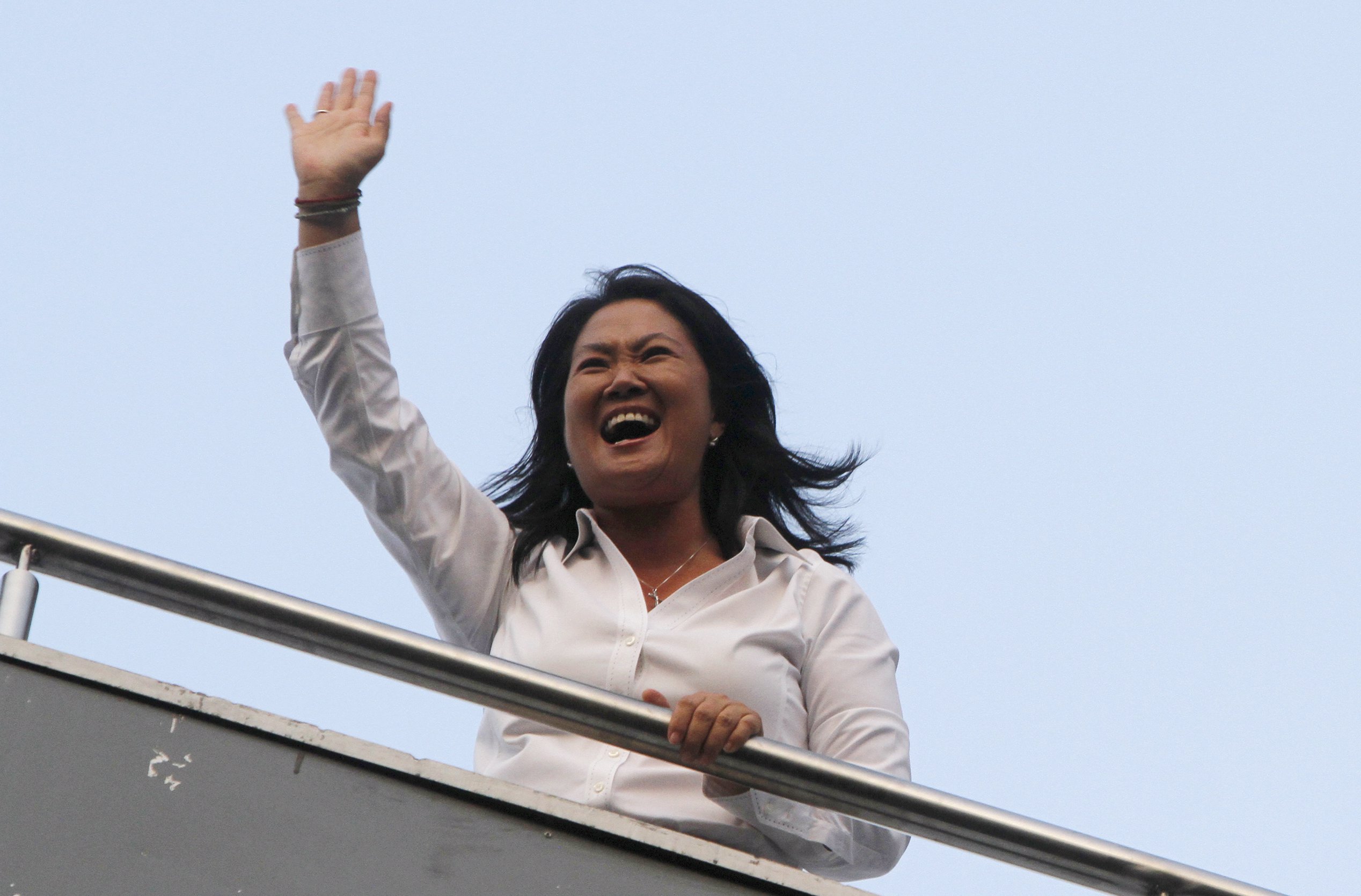
"We don't want a polarised nation," he said, after dancing in front of supporters on Sunday night, although he urged calm until official results were in. "We have made progress but not enough. We are going to make a progressive government, socially and economically."
Fujimori has said she would drive economic growth forward at the end of a decade-long mining boom by tapping a rainy day fund and issuing new debt to fund badly needed infrastructure. She has portrayed herself as the only candidate who would be sufficiently tough on crime.
"Keiko would get rid of terrorists and criminals," said Alejandro Placido, a 32-year-old electrician after voting in Lima on Sunday.
Financial markets will likely rise on news of a Fujimori-Kuczynski run-off if it is confirmed.
Fears that Mendoza might make it into the run-off led Peru's currency, the sol, to weaken 1.5% and the benchmark stock index to fall 4.39% over the past week.
Mendoza, 35, promised leftist social reforms and said Peru's powerful mining industry should have less influence. She also wants to stop exporting natural gas to favor domestic use.
She thanked her supporters on Sunday night from her home city of Cuzco, once the capital of the Incan empire. "We've shown that we can do politics differently," she said.
Mineral wealth
On track to become the world's second-largest copper producer, Peru has enjoyed nearly two decades of uninterrupted economic growth.
Despite its vast natural resources, it remains largely undeveloped outside its main cities, and many voters say outgoing President Ollanta Humala failed to fulfil his promises of reducing inequality.
Presidents are not allowed to run for consecutive terms in Peru and Humala has not endorsed any candidate.
The campaign was jolted by the unprecedented barring of two leading candidates late in the campaign, one for violating minor electoral procedures and the other for handing out cash while campaigning.
Critics said the ejections unfairly favoured Fujimori and the head of the Organization of American States warned elections would be "semi-democratic."
Fujimori's chances in the run-off will depend largely on whether she can distance herself from her father, who was convicted of corruption and human rights abuses tied to his 1990-2000 rule.
She says her father will ultimately be absolved by the courts but has promised not to use her power if she is elected to free him from prison.
Human rights activists remain wary and protests on April 5, 24 years after Alberto Fujimori dissolved Congress, drew tens of thousands of Peruvians.
Fujimori's rejection rates jumped after the protests, with 51% of Peruvians saying they would "definitely not" vote for her, one poll showed.
(Reuters)


